5 причин для покупки процессоров с 8 и более ядрами в 2020 году
В комментариях к блогу «7 причин, по которым вам не стоит покупать мощную видеокарту» развернулась оживленная дискуссия между читателями. Причем и аргументы любителей дорогих видеокарт, и аргументы экономных пользователей вполне обоснованы и имеют право на существование.
А вот упоминание в комментариях бюджетных процессоров и экономии на них подтолкнули меня написать этот блог.
реклама

На первый взгляд, в игровом ПК видеокарта намного важнее процессора и это вполне логично и подтверждается тестами. Но только до тех пор, пока процессора хватает для тестируемой конфигурации.
реклама
Но как только его загрузка приближается в играх к 100%, игрока ждут фризы, статтеры и нестабильная кадровая частота. При этом число кадров в секунду, отображаемых мониторингом MSI Afterburner или FPS Monitor, вполне может держаться у заветной отметки «60».
С этой проблемой сталкиваются как пользователи, давно сидящие на устаревшем «железе» и поставившие в него мощную видеокарту, так и купившие в магазине игровой ПК, в котором сэкономлено на всем, кроме видеокарты.

А если процессор настолько слаб, что не успевает подгружать текстуры, вас ждет вот такая картина.
Причина первая — прогресс ускорился
реклама
В данный момент на рынке ПК в течении уже пары лет происходит тектонический сдвиг, в результате которого четырехъядерные процессоры оказались на обочине прогресса.
Еще вчера Core i7-7700K был оптимальным выбором для игровой машины, а сегодня Ryzen 3 3100, предлагающий похожую производительность, позиционируется как бюджетное решение начального уровня.

реклама
Оптимальными решениями на конец 2020 года являются универсальные шестиядерные 12-ти поточные процессоры, которые подойдут и в игровую машину, и в рабочий ПК. Хиты продаж — Ryzen 5 3600 и Core i5-10400F, стоящие в районе 14000 рублей.
Но пользователи, покупающие их сейчас, роют себе такую же яму, в которую попали покупатели мощных четырехъядерников в 2015-2017 годах, например Core i5-6600K или Core i5-7500.

Англ. bottleneck — узкое место, бутылочное горлышко.
Причина вторая — новые консоли
Дело в том, что уже существующие новые игры легко задействуют шесть ядер и с выходом новых консолей — PlayStation 5 и Xbox Series X, такая ситуация станет нормой. А получаем мы, ПК-геймеры, в основном игры портированые с консолей на ПК.

Причина третья — уже есть много отличных игр, требующих много ядер
Игры, которые создавались эксклюзивно для ПК и обсчитывают сложный искусственный интеллект, уже сейчас загружают больше, чем шесть ядер. В основном это стратегии, например — Anno 1800, Sid Meier’s Civilization VI или серия Total War.
Я играю в Anno 1800 на разогнанном до 4 ГГц Ryzen 5 1600 и вижу, что даже с видеокартой GeForce GTX 1060 игре нужен более мощный процессор.

Причина четвертая — конкуренция между Intel и AMD обострилась
Добавьте к этому обострившуюся конкуренцию между Intel и AMD, которая и привела к резкому наращиванию ядер, и вы поймете, что шесть ядер в 2020 году — это заранее обреченное на быстрое устаревание решение.
Многим кажется, что дополнительные два ядра, за которые нужно доплатить почти 80% цены — это неоправданные и лишние траты. Но это такая же переплата, как за Core i7-2600K в 2013 году, когда все покупали Core i5-2500K.

Эта переплата позволила владельцам Core i7-2600K пропустить один апгрейд или пару-тройку лет. Даже сейчас этот процессор вполне способен работать в связке с GeForce GTX 1660.

И точно также переплата за восьмиядерный процессор в 2020 году позволит вам сохранить актуальность вашего ПК на два-три года дольше.
Причина пятая — есть простой способ сэкономить при переходе на восемь и более ядер
Что же делать, если вы решились на апгрейд прямо сейчас, но доплатить за восьмиядерник такую огромную сумму вам жалко? Есть неплохой выход, особенно с системами AM4. Вы можете купить хорошую материнскую плату, которая будет гарантированно поддерживать процессоры Ryzen 4000 и комплект хорошей памяти.

А процессор взять бюджетный, с таким расчетом, чтобы сменить его с минимальными потерями на Ryzen 4000, на подешевевший Ryzen 7 3700X или даже на 12-ти ядерный Ryzen 9 3900X.

Я выбрал именно такой вариант, купив плату на B450 чипсете и недорогой Ryzen 5 1600, которого с разгоном пока хватает, как бюджетный вариант.
Напишите в комментарии, а что вы думаете о проблеме скорого морального устаревания шестиядерных процессоров? И какой процессор стоит у вас?
Компьютеры с процессорами Intel® Core™ 8-го поколения
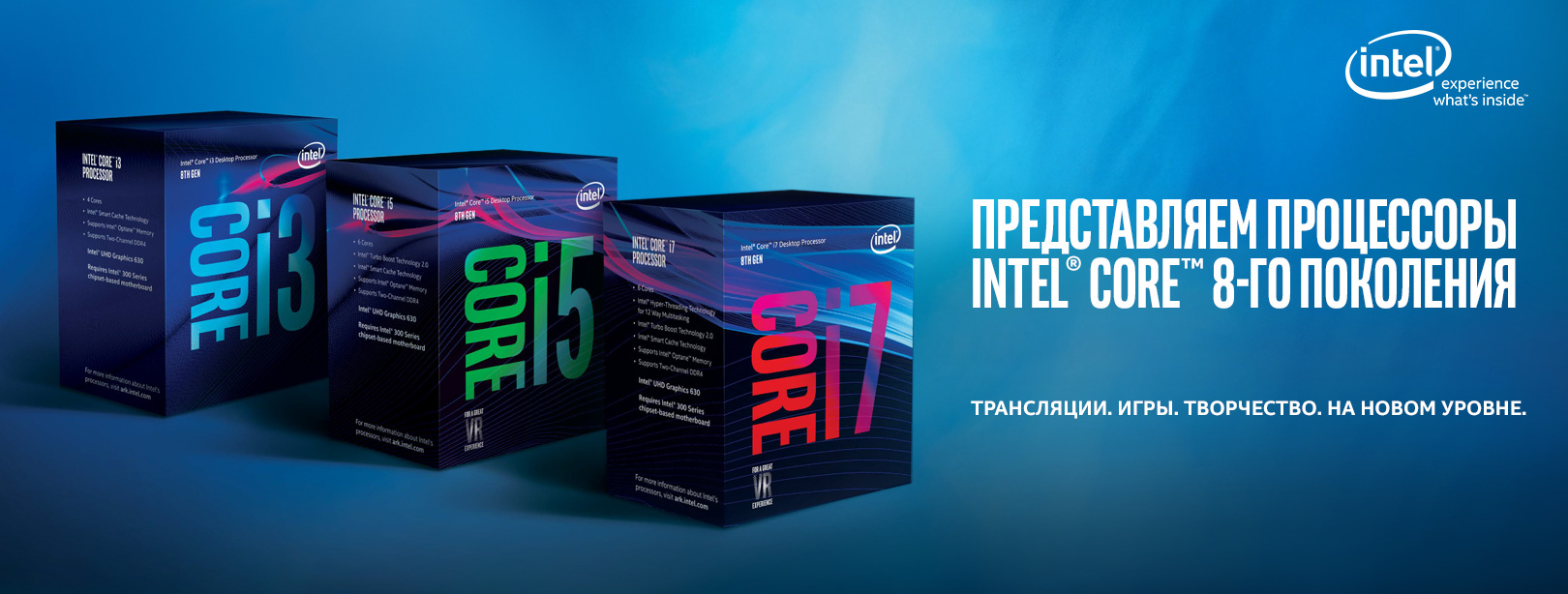
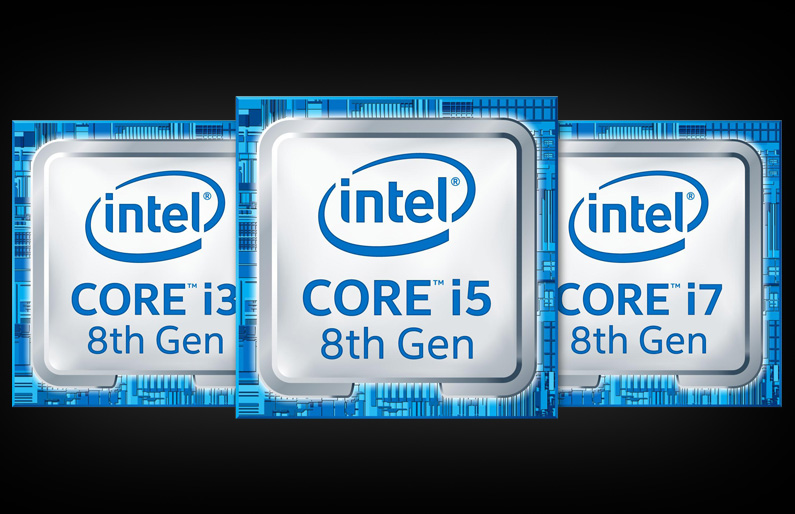
Сегодня, 5 октября, стартовали продажи новейших процессоров Intel ® Core™ 8-го поколения с ядром под кодовым названием Coffee Lake-S для настольных ПК. Они предназначены для обновленного процессорного разъема LGA 1151-v2 и работы с новыми чипсетами Intel ® 300-й серии. Основными отличиями новой архитектуры являются улучшенная производительность многопоточных вычислений (поддержка 6-ядерных процессоров), поддержка технологии Intel ® Turbo Boost 2.0, поддержка новейших скоростных интерфейсов передачи данных и следующего поколения технологии энергонезависимой памяти Intel ® Optane™
Процессоры Intel ® Core™ 8-го поколения и материнские платы от MSI с чипсетом Intel ® Z370 Express уже доступны в компьютерах и конфигураторах HYPERPC!
Новые процессоры Intel ® Core™ 8-го поколения
На шаг впереди
Новый компьютер с процессором Intel ® Core™ 8-го поколения позволяет быть на шаг впереди технологий современного цифрового мира. Новые процессоры обеспечивают существенное повышение производительности по сравнению с предыдущим поколением. Встроенные функции безопасности позволят вам уверенно совершать покупки, а благодаря поддержке разрешения 4K UHD вы откроете для себя целый мир новых развлечений.
Процессоры Intel® Core™ 8-го поколения несомненно обеспечат максимально плавный игровой процесс и позволят насладиться комфортной игрой. Благодаря технологии Intel® Turbo Boost 2.01 2 ваш компьютер обеспечит достаточную мощность и быстродействие для существенного повышения эффективности вашей работы. Наслаждайтесь исключительной производительностью в играх и увлекательными зрелищами с фантастическим качеством.
- Intel ® Core™ i3-8100
- Intel ® Core™ i5-8400
- Intel ® Core™ i5-8600K
- Intel ® Core™ i7-8700
- Intel ® Core™ i7-8700K
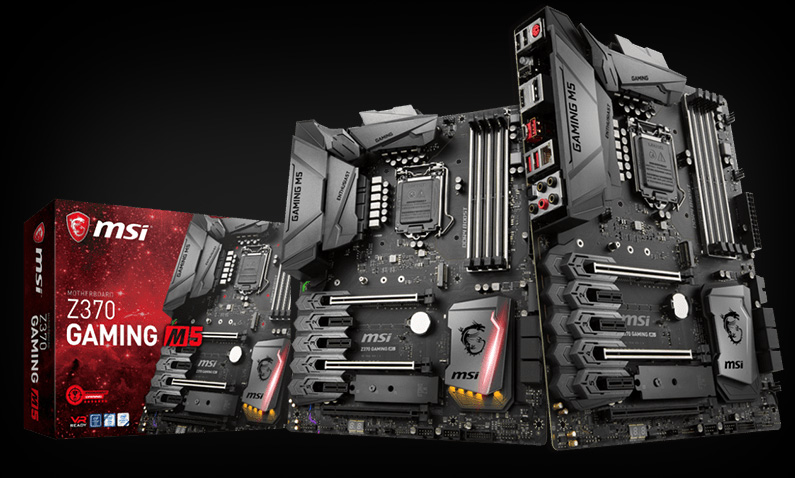
Новые материнские платы MSI Z370
Для энтузиастов, геймеров и профессионалов
Компания MSI специально к выходу процессоров Intel ® Core™ 8-го поколения подготовила новую серию продуктов нацеленных на энтузиастов и геймеров. Эти модели созданы на базе платформы Z370 и обладают полной поддержкой новых 6-ядерных процессоров Intel ® . Не остались без внимания и пользователи, работающие в профессиональных приложениях по созданию и обработке различного контента. Для них предлагается линейка продуктов PRO. Во всех материнских платах MSI применяются эксклюзивные технологии, делающие их прекрасным выбором для любого пользователя, от энтузиастов и геймеров до профессионалов.
- MSI Z370 GAMING M5
- MSI Z370 GODLIKE GAMING
- MSI Z370 KRAIT GAMING
- MSI Z370-A PRO
Новые материнские платы ASUS Z370
Настроены на совершенство.
Более 25 лет удостоенных наград инженерных разработок обеспечивают идеальный баланс производительности и мощности. Представляем материнские платы серии Z370 от ASUS и ROG. Исключительно спроектированные для процессоров Intel® Core ™ 8-го поколения, наши новые платы Z370 — это просто самые лучшие, самый продаваемые, простые в использование, стабильные и надежные.
6 Core vs 8 Core: Which Is the Better Processor Option?
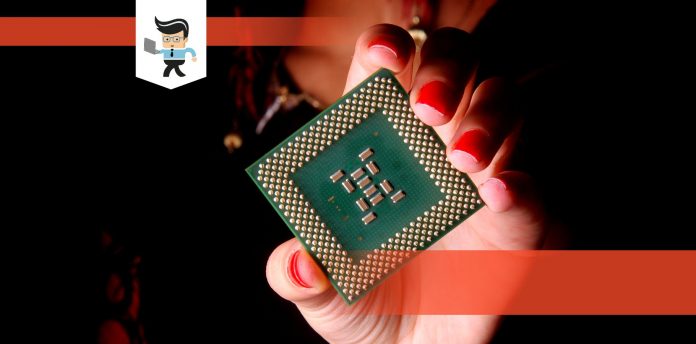
6 vs 8 Core Processor Comparison
Until a few years ago, most of the CPUs on the market were single-core, but that isn’t so anymore. Now, builders and gamers are considering 6 core vs 8 core processors more.
To begin with, processors have multiple cores to carry heavier clock speeds and allow for multiple apps to be open at the same time (think gaming and streaming, for example).
Multi-core processors are popular as the load became too much for a single processor and processors themselves couldn’t be updated due to size and tech limits. Manufacturers have shifted to replicating the processing units and creating multiple cores to help programs run faster.
While there are much larger cores available, most people choose between a 6 core processor and an 8 core processor for gaming, heavy workloads, and more because they are the most readily available.
As they serve almost the same purpose, are there significant differences between 8 core and 6 core processors? Read on to find out.
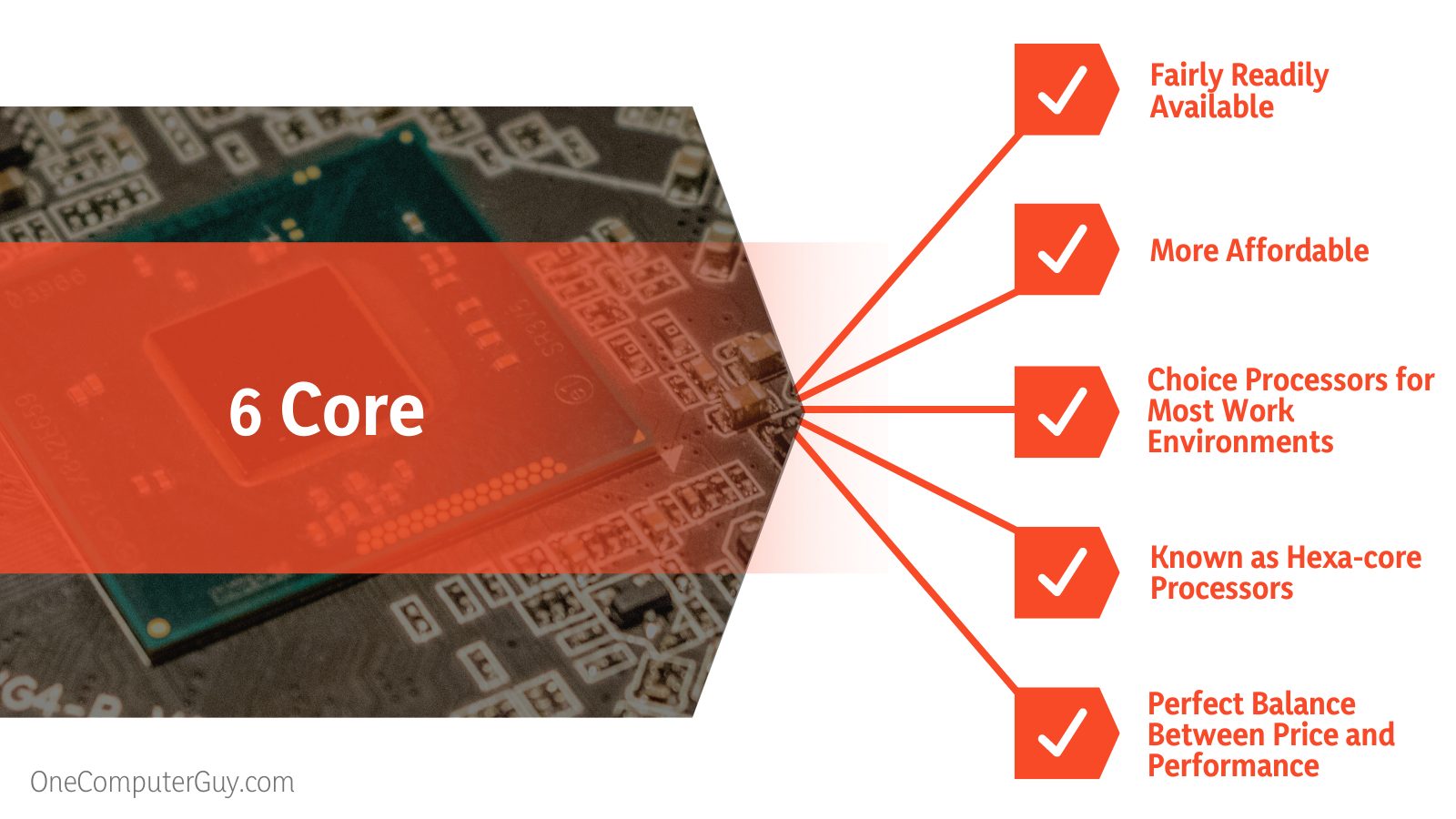
- Fairly readily available
- More affordable
- Choice processors for most work environments
- Processes a lot at the same time
- Smoother performance
- Chosen processors for gamers, developers, designers
6 Cores vs 8 Cores: The Battle
Both 6 cores and 8 cores processors are made for gaming and heavy workload processes. Our experts have listed their similarities and differences below.
– 6 Cores CPU
Six-core CPUs (also known as hexa-core processors) are the choice processors for most work environments because they have that perfect balance between price and performance. They are sufficient in most buildings unless someone is going to be editing photos or videos or working with architecture software, for example.
They can be used for full-stack web development. They can even be used for CPU-intensive games, though as heavier games come out, there will be some limitations.
Six-core CPUs are available fairly readily on almost all platforms and are used widely by competitive gamers. Users who need multithreading should aim to use a 6 core CPU, but you don’t have to use it to get all of the benefits. You just need to ensure that your processor can handle what you want to do.
Most games won’t depend as much on multithreading anymore, so that isn’t something you need to fixate on as you build your rig.
– 8 Core Computer
Eight-core CPUs (also known as octa-core processors) are the chosen processors for gamers, developers, designers, and other work environments that require powerful machines. They are some of the more expensive models, but they make work a lot easier for people who have to process a lot at the same time, like architects, editors, and graphic designers. They can be used by anyone, but most work environments will think they’re overkill.
Eight-core computers are available for purchase already put together and ready to go, or you can buy them individually to build your own rig. You just need to make sure that the rest of the parts in the computer can match and live up to the speed and bandwidth. This makes building a computer a bit harder with 8 cores, but certainly not impossible.
Moving into the future, most computers will have 8 cores standard and those who need more will have higher versions.
What Is the Difference Between 8 Core and 6 Core?
The main difference between 6 core and 8 core is, with an 8 core CPU you can do multiple things at the same time and have a smoother performance compared to 6 core.
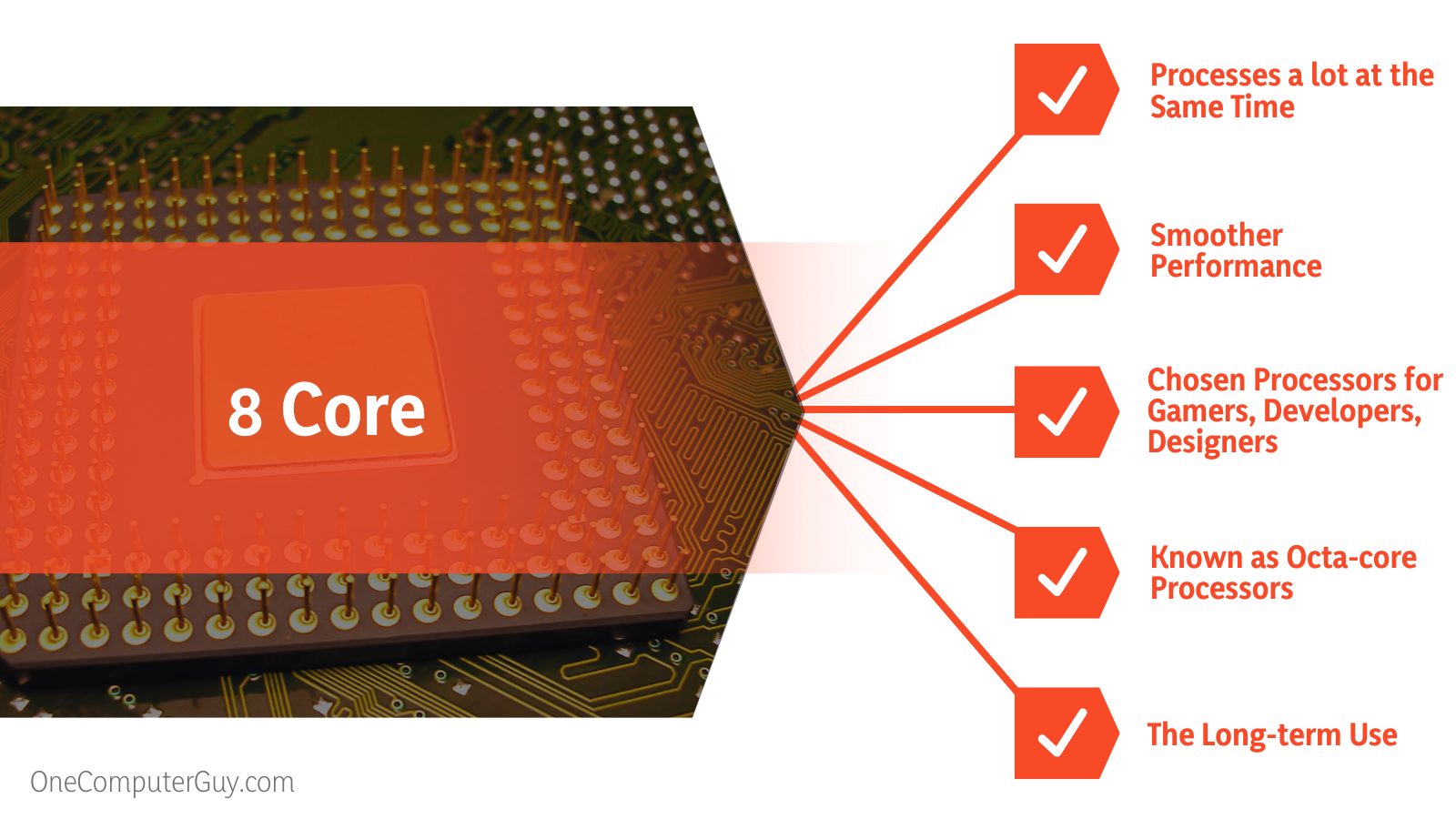
The number of cores indicates just how many tasks a CPU can do at the same time. This doesn’t necessarily mean that an 8 core CPU can handle eight tasks, but rather that you can do multiple things at the same time. The more cores you have, the smoother the performance of your computer is going to be.
When comparing 6 cores and 8 cores, you should also consider the long-term use. Games are only getting more complex these days and soon enough they will need more cores to give you the high performance that you need. You also need to think about your GPU as well as the CPU.
Are Your Cores Physical or Logical?
Another thing you need to pay attention to is whether you have physical cores or logical cores on your CPU. Logical cores are also called threads. Intel and AMD, in particular, use threads and logical cores to help split up the power of a physical core so that it functions as two or more logical cores.
Almost all new CPUs will feature a combination of physical cores and logical cores to help keep everything small. Even budget CPUs will have logical cores.
You really need to look at the overall picture to determine whether or not you are going to have enough cores for your build.
You would want to check:
- How the GPU and the CPU interact
- Whether you will be playing games or not
- If you are, how are the games coded?
- Whether you will be streaming
With logical or physical cores, there really isn’t a large difference in performance. There may be a smaller gap in some games, but that’s rare and only in games that have a ton of action and graphics.
6 Core vs 8 Core for Gaming: Which One Is More Suitable?
When computers were first built, there was only one core and this led to issues with gaming. As gaming became more popular and technology got better, there were computers with 4 cores, 6 cores, and 8 cores. A higher core count means that a rig can do more.
Before 2008 or so, having a CPU with a higher core didn’t mean much because games weren’t developed to take advantage of multiple CPUs. Now that has changed and there is a pretty significant difference between having 6 cores and having 8 cores. As this change has largely impacted games, developers started to make games that take advantage of higher core counts as well.
Single-core performance is important for gaming because you need to break down the individual cores and see how they function. However, in general, the more cores you have, the better off you will be.
If you are a serious gamer who is on a budget, then using 6 cores is going to be plenty. In most situations, you won’t use all of the cores anyway. For gamers that stream, however, an 8 core CPU can significantly improve the end results of your build.
Each game will interact differently with the cores. Not all games are going to benefit from having more cores. However, no games will encounter any issues because of too much core space (though some games will have issues if there is too little). If you really want to future-proof your rig, splurge and get more cores.
Currently, we have no way of knowing whether or not 6 cores will be enough into the future, but trends say probably not.
Core Bottlenecking Will Be an Issue With Both
The purpose of having more cores is to avoid bottlenecks. Unfortunately, there are always going to be issues with a bottleneck with certain activities. If your GPU isn’t working at maximum capacity because your CPU doesn’t have enough cores or is too slow, you are going to have a bottleneck. This can apply when you pair older parts with newer parts or a CPU and GPU that aren’t congruent.
If your GPU isn’t working at the same speed as your CPU, you are going to have a bottleneck there. If your GPU is faster than your CPU, and you don’t have enough cores, your CPU will cause the bottleneck. Unless your CPU and GPU match, you won’t have any extra performance support and you will have spent way too much money on one aspect of your rig.
Unfortunately, there are some other unpredictable bottlenecks that exist. It is a battle that you will have to fight at every turn.
Conclusion: Which Processor Do We Recommend?
It is important to note that the core count of a processor depends on how many tasks it can process in parallel.
There are other factors that go into performance as well, and that doesn’t necessarily mean you can operate six or eight heavy tasks at the same time.
Instead, it refers to individual tasks and most applications (especially while gaming) request multiple independent tasks. Even with 8 cores, it is possible to overwhelm your CPU. As such, you need to be wary of temperatures and cooling.
Overall, you can never have too many cores, but you can have too few. We’d suggest getting 8 cores instead of 6 cores if you think you are going to need them, like when you are gaming or doing heavy processing tasks. If you will just be using your computer for general tasks like word processing, a 6 core will be enough.
8 Cores
Exploring the Benefits of 8 Core Processors for Gaming
The gaming industry has seen a massive surge in popularity over the past few years, and with it, an increased demand for more powerful hardware. One of the most important components of any gaming setup is the processor, and 8 core processors are becoming increasingly popular among gamers. In this blog post, we’ll explore the benefits of 8 core processors for gaming and why they’re becoming so popular.
First and foremost, 8 core processors offer significantly improved performance compared to their 4 core counterparts. This means that games can run faster and smoother, allowing for a more immersive experience. Additionally, 8 core processors are capable of handling more complex tasks, such as streaming or video editing, without sacrificing performance. This makes them ideal for those who want to do more than just game on their PC.
Another benefit of 8 core processors is that they are more energy efficient than their 4 core counterparts. This means that they use less power, which can help reduce your electricity bill. Additionally, 8 core processors generate less heat, which can help keep your system cooler and extend its lifespan.
Finally, 8 core processors are becoming increasingly affordable. As technology advances, prices tend to drop, making 8 core processors more accessible to the average consumer. This means that you don’t have to break the bank to get a powerful gaming setup.
In conclusion, 8 core processors offer a number of benefits for gamers. They provide improved performance, better energy efficiency, and are becoming increasingly affordable. If you’re looking to upgrade your gaming setup, an 8 core processor is definitely worth considering.
Comparing 8 Core Processors to Other Processor Types
When it comes to choosing a processor for your computer, there are many different types and models available. One of the most popular types is the 8 core processor, which offers superior performance and multitasking capabilities. In this blog post, we will compare 8 core processors to other processor types to help you decide which one is best for your needs.
First, let’s look at the advantages of an 8 core processor. These processors offer excellent multitasking capabilities, allowing you to run multiple programs simultaneously without any lag or slowdown. They also provide faster speeds than other processor types, making them ideal for gaming and other intensive tasks. Additionally, 8 core processors are more energy efficient than other types, meaning they can help reduce your electricity bills.
Now, let’s compare 8 core processors to other processor types. Quad-core processors are the most common type of processor, offering good performance and multitasking capabilities. However, they are not as fast or energy efficient as 8 core processors. Dual-core processors are even slower and less energy efficient than quad-core processors, making them a poor choice for gaming or other intensive tasks.
Finally, let’s compare 8 core processors to single-core processors. Single-core processors are the slowest and least energy efficient of all processor types, making them unsuitable for most modern applications. They are only suitable for basic tasks such as web browsing and word processing.
In conclusion, 8 core processors offer superior performance and multitasking capabilities compared to other processor types. They are faster, more energy efficient, and better suited for gaming and other intensive tasks. If you need a powerful processor for your computer, then an 8 core processor is the way to go.
How 8 Core Processors Impact Multitasking Performance
In today’s world, multitasking is a necessity. We often need to juggle multiple tasks at once, from work projects to streaming movies and playing games. To ensure that our devices can keep up with our demands, it is important to understand how different components of the computer affect multitasking performance. One such component is the processor, which is responsible for executing instructions and performing calculations.
The number of cores in a processor is one of the most important factors when it comes to multitasking performance. A core is essentially a single processing unit within a processor, and the more cores a processor has, the better it will be able to handle multiple tasks simultaneously. This is because each core can process its own set of instructions independently, allowing the processor to divide tasks among the cores and complete them faster.
For example, if you are running a game and streaming a movie at the same time, having a processor with 8 cores will allow the processor to split the tasks between the cores and complete them faster than if it only had 4 cores. This means that you will experience less lag and smoother multitasking performance.
In addition to improved multitasking performance, having 8 cores also allows for higher clock speeds. This means that the processor can run faster and more efficiently, resulting in better overall performance.
Overall, having 8 cores in a processor can significantly improve multitasking performance. It allows the processor to divide tasks among the cores and complete them faster, as well as run at higher clock speeds for better overall performance. If you are looking for a device that can handle multiple tasks at once, then a processor with 8 cores is definitely worth considering.
Optimizing Your System with an 8 Core Processor
If you’re looking to optimize your system with an 8 core processor, you’ve come to the right place. An 8 core processor is a powerful tool that can help you get the most out of your system. With its increased processing power and multitasking capabilities, it can help you maximize your system’s performance.
When selecting an 8 core processor, there are several factors to consider. First, you should look at the clock speed of the processor. This will determine how quickly the processor can process data. You should also consider the number of cores, as this will affect the amount of multitasking you can do. Additionally, you should look at the cache size, which will determine how much data can be stored in the processor’s memory. Finally, you should consider the thermal design power (TDP), which will determine how much heat the processor generates.
Once you’ve selected the right 8 core processor for your system, you can begin optimizing it. To start, you should ensure that your operating system is up to date. This will ensure that you have the latest security patches and bug fixes. Additionally, you should make sure that all of your drivers are up to date. This will help ensure that your hardware is running optimally.
Next, you should consider overclocking your processor. Overclocking is the process of increasing the clock speed of the processor beyond its rated speed. This can provide a significant boost in performance, but it should only be done if you know what you’re doing. If you’re not comfortable with overclocking, you should leave it to the professionals.
Finally, you should consider using a cooling system to keep your processor from overheating. A good cooling system will help ensure that your processor runs at optimal temperatures, allowing it to perform at its best.
By following these steps, you can optimize your system with an 8 core processor. With its increased processing power and multitasking capabilities, it can help you get the most out of your system.
Understanding the Different Types of 8 Core Processors
When it comes to choosing a processor for your computer, there are many different types of 8 core processors available. It can be difficult to know which one is right for you, so it’s important to understand the differences between them. In this blog post, we’ll take a look at the various types of 8 core processors and what they offer.
The first type of 8 core processor is the Intel Core i7. This processor is designed for high-end gaming and multimedia applications. It offers excellent performance and power efficiency, making it ideal for those who need a powerful processor for their gaming or multimedia needs.
The second type of 8 core processor is the AMD Ryzen 7. This processor is designed for multitasking and productivity. It offers great performance and power efficiency, making it perfect for those who need a reliable processor for their everyday tasks.
The third type of 8 core processor is the Intel Core i9. This processor is designed for extreme performance and power efficiency. It offers the highest level of performance and power efficiency, making it ideal for those who need the best performance possible.
Finally, the fourth type of 8 core processor is the AMD Ryzen 9. This processor is designed for ultimate performance and power efficiency. It offers the highest level of performance and power efficiency, making it perfect for those who need the absolute best performance possible.
No matter which type of 8 core processor you choose, you can rest assured that you’ll get excellent performance and power efficiency. Each type of processor has its own unique features and benefits, so make sure to do your research before making a purchase. With the right processor, you can enjoy a smooth and powerful computing experience.
The Pros and Cons of Investing in an 8 Core Processor
Investing in an 8 Core Processor is a great way to upgrade your computer’s performance. With the increased number of cores, you can expect improved multitasking capabilities and faster speeds. However, there are some potential drawbacks to consider before making the purchase.
1. Improved Performance: An 8 Core Processor offers improved performance over a single or dual core processor. This means that you can run multiple applications at once without experiencing any lag or slowdown. Additionally, the extra cores allow for faster processing speeds, which can be beneficial for gaming and other intensive tasks.
2. Cost-Effective: Investing in an 8 Core Processor is often more cost-effective than buying multiple processors. This is because you get all the benefits of multiple cores in one package.
3. Future-Proof: An 8 Core Processor is future-proof, meaning it will be able to handle new software and hardware as they become available. This ensures that your computer will remain up-to-date with the latest technology.
1. Power Consumption: An 8 Core Processor requires more power than a single or dual core processor. This means that you may need to invest in a more powerful power supply to ensure that your computer runs smoothly.
2. Heat Generation: The additional cores generate more heat, which can cause your computer to overheat if not properly cooled. You may need to invest in additional cooling solutions such as fans or liquid cooling systems.
3. Compatibility Issues: Not all software and hardware is compatible with an 8 Core Processor. Before making the purchase, make sure that your current software and hardware will work with the new processor.
Overall, investing in an 8 Core Processor can be a great way to upgrade your computer’s performance. However, it is important to consider the pros and cons before making the purchase. Make sure that your current software and hardware are compatible with the new processor and that you have the necessary cooling solutions in place.