Complete guide to coffee roasts
Roasting transforms processed green coffee beans into the fragrant and delicious coffee you brew every day. Did you know, the level to which beans are roasted is one of the most important factors that determine the flavors you taste in your favorite cup? Learn more about the different types of roasts, how much caffeine you can expect in each, and what products you can try to experience the full spectrum of coffee flavors from light to dark.
HEAT AND THE ART OF COFFEE ROASTING
Heat is the essential element of coffee roasting and what releases the array of flavors and aromas that make coffee so alluring. During the roasting process, high levels of heat are applied to green coffee beans, which causes a dramatic chemical change.
Starting between 280 and 330 degrees Fahrenheit, the high temperatures inside of a coffee roaster force water and other volatile compounds out of the coffee beans. Then, sugars and amino groups in proteins react with the heat and cause the beans to brown. This reaction is called the Maillard reaction and is the same chemical process that creates the distinct and delicious flavors of browned foods like steak, pan-seared vegetables, and toasted marshmallows.
As the temperature increases, further chemical reactions take place. Once the water inside the beans is completely vaporized around 400 degrees Fahrenheit, the beans expand and crack. A light roast coffee is done at this point, but medium and dark roast beans continue to react and change. Around 430 degrees Fahrenheit, coffee beans undergo a chemical process called Pyrolysis, which causes the release of carbon dioxide and a second crack, which gives the beans their deep, rich color and dark roast beans an oily sheen.
TIMING IS EVERYTHING
Time is another critical element of coffee roasting and much more challenging to master. The difference between the desired roast level and a burned bean can be just a matter of seconds. That’s why experience matters.
COFFEE ROASTING EQUIPMENT

Coffee roasting is an activity where all your senses are engaged. The color of the beans, sounds, and aromas they produce are all clues to achieving the perfect roast. Thankfully we also have technology. When beans enter a commercial coffee roaster, software is used to program and select the desired roast level, but it takes a human touch to get it just right.
As the beans roast, they are closely monitored by a roasting professional. A small scoop is inserted into the roasting drum every few seconds to check the color and texture of the beans. As soon as the desired roast level is achieved, the beans are quickly transferred to a cooling drum, where they are gently stirred to reduce their temperature and stop the roasting process.
COFFEE ROAST TYPES
Surprisingly, there is not much industry standardization when it comes to coffee roasting types and labels. Each roastmaster may have their own equipment, time, and temperature formulas for achieving their signature roasts. However, most coffee roasts fall somewhere on a spectrum of light to medium, medium-dark, and dark roasts.
LIGHT ROASTS

Light roast coffee is light brown in color and retains more caffeine than darker roasts. In general, it has a mild flavor and more acidity or brightness than darker roasts because the beans haven’t roasted long enough to force the natural oils out of the bean. Another appealing quality of light roast coffee is that you may taste more flavor nuances unique to its origin.
When purchasing light roast coffee, look for labels with the following descriptors:
- Light roast
- Light city roast
- Half city roast
- Cinnamon roast
SELECT MZB LIGHT ROAST COFFEES
MEDIUM ROASTS
Medium roast coffee is sometimes referred to as American roast because of its popularity in the USA. Medium roast coffee is a deeper brown color than light roast but still retains a matte or unglossy finish. Medium roast coffee strikes a balance between bright, sweet, and bitter flavors, which is why it is a palate pleaser for so many.
When shopping for medium roasts, look for labels such as:
- Medium roast
- City roast
- Breakfast roast
- American roast
SELECT MZB MEDIUM ROAST COFFEES
MEDIUM-DARK ROASTS

Coffee roasted to a medium-dark level is a rich, dark brown color and has a slightly oily or glossy finish. At this roast level, the natural oils in the coffee bean are forced to the surface, and most of the acidic bite or brightness you can taste in light and medium roast coffees all but disappears. Medium-dark roast coffee can have a sweet aftertaste that balances well with the more bitter flavor notes that can appear at this roast level.
When shopping for medium roast coffee, look for labels that say:
- Medium-dark
- 50/50
- Full city roast
DARK ROASTS
The darker the roast, the less caffeine the coffee will contain. Dark roast coffee is very dark in color with a gleaming, oily finish. The most notable flavor attribute of dark roast coffee is its striking bitterness. Because of the pronounced bitter notes of dark roast coffee, it pairs exceptionally well with milk or cream.
Dark roast coffee is called by many names. When shopping for dark roast coffee, look for labels such as:
- Dark roast
- French roast
- Italian roast
- Espresso roast
- Continental roast
SELECT MZB DARK ROAST COFFEES
Ultimately, the roast you choose is all about your preferences. If you enjoy more caffeine in the morning, you may enjoy a light roast to start the day. If you prefer your coffee has a bit of a bite, try dark roasts and experimenting with cream, milk, and sugar. What’s your favorite roast? Tell us on Facebook or Instagram. Follow @chockfullonutsnyc, @hillsbroscoffee, @kauaicoffeeco, @mjb_coffee, and @SegafredoUSA
Гид по обжарке кофе: понятие, технология, степени обжарки
Кофе изготавливают из молотых зерен, но перед помолом их обжаривают, иначе напитка не получится. Это одновременно сложный и простой процесс, так как нужно знать теорию и следить за температурой. Бытует ошибочное мнение, что горечь кофе придаёт исключительно кофеин. На самом деле кофеин «ответственен» только за 10–15% горчинки, остальное зависит от степени обжарки зёрен. Можно даже обжарить кофе в домашних условиях, но бариста должен следовать определенным технологиям, чтобы не испортить вкус продукта и сохранить его полезные свойства.
История
Первые свидетельства обжарки кофе дошли до нас из Османской Империи и датируются XV веком, тогда в качестве посуды использовали тонкие округлые листы из металла или фарфора. Они были оборудованы длинной ручкой, чтобы «сковородку» было удобно держать над жаровней с углями, периодически потряхивая и перемешивая зерна.
Приблизительно в 1650 году в Каире изобрели цилиндрический ростер, позволяющий обжаривать большие порции кофе. Вскоре нововведение переняли во Франции, Голландии, Италии и других европейских странах.
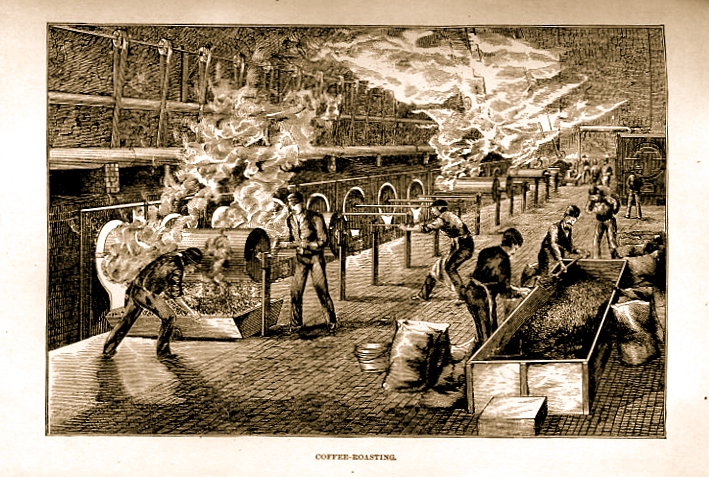
Цилиндрические ростеры для обжарки кофейных зерен
В XIX веке запатентовано множество коммерческих ростеров, предназначенных для массовой обжарки кофе. При этом любители бодрящего напитка продолжали обжаривать зерна вручную на противнях и кухонных плитах. Для таких энтузаиастов в 1849 году в Огайо появился домашний сферический ростер. Однако уже к 1900-м годам стало гораздо выгоднее покупать заранее обжаренный кофе: благодаря развивающимся технологиям, он стоил только немногим дороже сырого.
В 1903 и 1906 году в США и Германии запатентовали электрические ростеры, соответственно, была решена проблема дыма, влияющего на вкус продукта. В 1976 году научились обжаривать зерна горячим воздухом, не рискуя спалить их в угольки. В наше время существует множество приспособлений для обжарки кофе, начиная от банальных металлических сеточек, которые надо ставить над открытым огнем, и заканчивая высокотехнологичными «умными» устройствами.
Бум кофеен в 1970-х годах сделал домашнюю обжарку зерен кофе практически бессмысленной, превратив её в удел тонких ценителей – установленные в кофе-шопах коммерческие ростеры позволяют быстро и качественно прожарить зерна до любой степени, в них можно запрограммировать стиль обжарки, при этом бариста не должен неусыпно находиться у плиты и помешивать кофе, чтобы зерна не сгорели.
Технология обжарки кофейных зерен
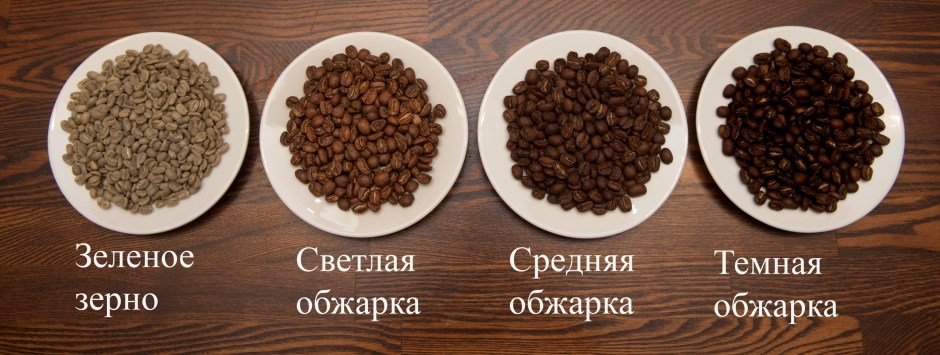
Сырые кофейные зерна имеют зеленый цвет. В принципе, их можно есть и так – например, добавлять в салат или настаивать на крепком алкоголе, но кофе как напитка из них не получится.
Промышленный процесс обжарки делится на следующие этапы: сортировка, обжарка, охлаждение, запаковывание.
При обжарке зерна кофе меняют цвет сперва на желтоватый, затем на коричневый, вдвое увеличиваются в размерах (но теряют в весе за счет выпаренной воды), приобретают характерный аромат. Если всё сделать правильно, в зернах разложатся дубильные вещества, плоды перестанут быть такими терпкими и вяжущими, в них сохранятся витамины B, образуется кофеоль (именно это вещество ответственно за вкусовые и ароматические характеристики кофе), выделятся эфирные масла.
Температура обжарки варьируется от 200 до 250 градусов Цельсия. Зерна должны быть прожарены равномерно, соответственно, их необходимо постоянно помешивать. Слишком слабый огонь не позволит аромату раскрыться до конца, слишком сильный – сожжет внешний слой зерна, оставив сердцевину сырой.
В промышленных условиях готовый жареный кофе охлаждают воздухом, реже – водой. Охлаждение необходимо, так как если оставить зерна остывать естественным путем, они будут продолжать жариться «изнутри» из-за уже набранной температуры.
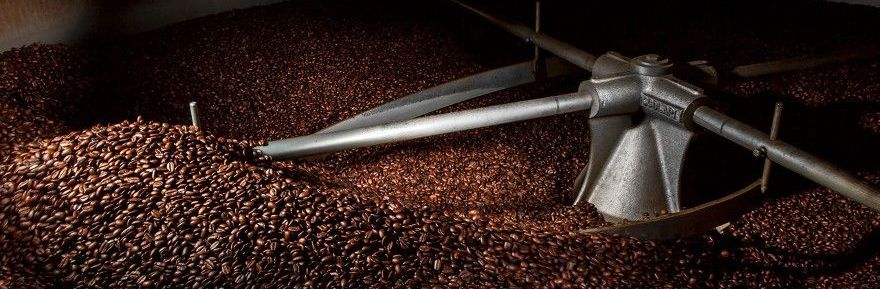
Промышленный ростер
Примерно на 196 °C зерна начинают потрескивать, этот звук («первый хлопок») обозначает начало фазы легкой обжарки. На 224 °°C происходит «второй хлопок», означающий, что расширявшиеся до этого зерна начали, наоборот, усыхать.
В некоторых странах в классический процесс привносится капелька местного колорита. Например, во Вьетнаме сырые кофейные зерна смазывают маслом и посыпают сахаром, так что к концу обжарки они карамелизируются.
После Первого хлопка зерна приобретают жареный аромат. После Второго хлопка начинают выделяться эфирные масла.
Степени обжарки кофе
до 205 °C). Сухие зерна светло-коричневого цвета с кисловатым привкусом без жареных ноток, прекрасно чувствуются индивидуальные характеристики сорта. Содержание кофеина 1.37%.
до 219 °C). Темно-коричневые зерна, сухие, кисло-сладкий вкус, насыщенный аромат. Напиток получается полнотелым, кислотность приглушена. Содержание кофеина 1.31%.
до 230 °C). Темно-коричневые зерна, с масляной пленкой, почти без кислинки, с горьковато-сладким вкусом, насыщенным жареным ароматом. Индивидуальные характеристики сорта почти не сохраняются. Содержание кофеина 1.31%.
до 245 °C). Черно-коричневый цвет зерен, вкус горький, с «дымком».
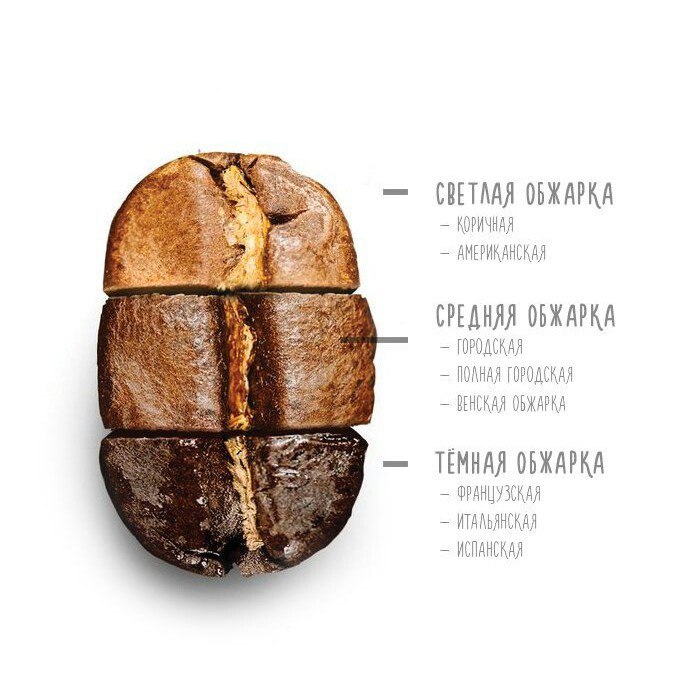
Также степени обжарки делят на «светлые» и «темные» (по цвету зерна).
Типы обжарки кофе
Важно помнить, что на финальные вкусовые и ароматические свойства кофе кроме обжарки влияют и другие факторы: сорт и возраст зерен, регион их выращивания, способ хранения и т.д.
В процессе обжарки содержащаяся в кофе хлорогеновая кислота разлагается на хинную и кофейную, попутно образуются горькие лактоны хлорогеновой кислоты. При сильной обжарке лактоны разлагаются, в результате возникает квинтэссенция горечи – фенилинданы. Поэтому чем сильнее обжарен кофе, тем интенсивнее горчинка.
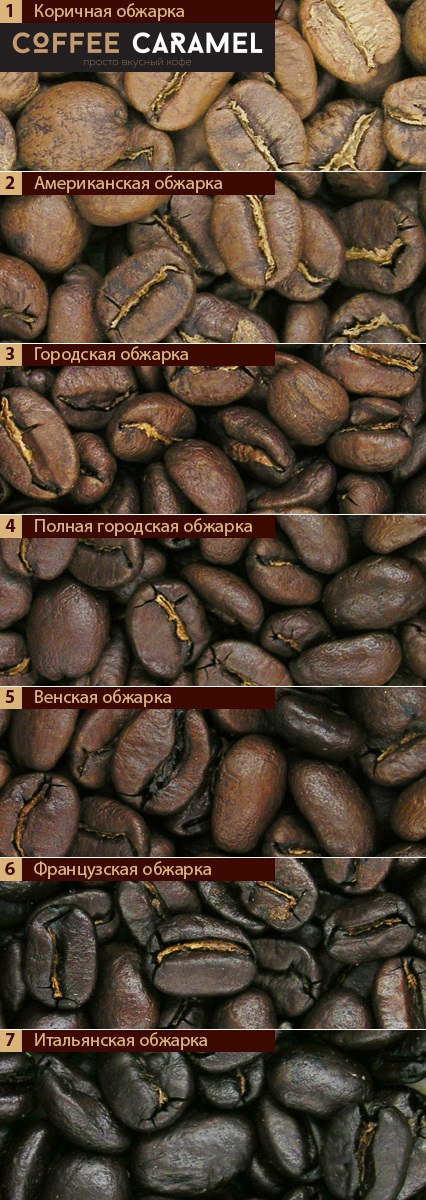
| Степень обжарки | Температура | Внешний вид зёрен | Вкус и аромат |
| Коричная (Cinnamon Roast) | +195 °C | Сухие, светло-коричневые | Нежный, с ароматом свежеиспечённого хлеба и ярко выраженной кислинкой |
| Новоанглийская, или лёгкая (New England Roast, Light) | +205 °C | Сухие, немного темнее, чем в предыдущем случае | Кислинка ещё есть, но уже без хлебных нот |
| Американская (American Roast) | +210 °C | Сухие, насыщенного светло-коричневого цвета | Кислинка сочетается с деликатными горько-сладкими нотами |
| Городская (City Roast) | +220 °C | Сухие, насыщенного коричневого цвета | Горько-сладкие ноты ощущаются явственнее, кислинка слабеет. Эта обжарка хороша для дегустаций кофе |
| Полная городская обжарка (Full City Roast | +225 °C | Насыщенного коричневого цвета, на поверхности – первые капельки масла | Во вкусе появляются оттенки шоколада и карамели |
| Венская (Vienna Roast) | +230 °C | Поверхность маслянистая, цвет – тёмно-коричневый | Кислинка исчезает, карамельные тона становятся интенсивнее |
| Французская (French Roast) | +240 °C | Цвет – тёмно-коричневый, на поверхности больше масла | В карамельные оттенки вплетаются жжёные тона, появляется терпкость. Эта обжарка считается оптимальной для приготовления эспрессо |
| Итальянская (Italian Roast) | +245 °C | Цвет всё темнее, масла больше | Горчинка ощущается всё явственнее. Обжарка подходит для эспрессо |
| Испанская (Spanish Roast) | +250 °C | Цвет коричнево-чёрный, поверхность маслянистая | Резкий горький вкус с нотами жжёного кофе. Эту степень обжарки выдерживают не все сорта: некоторые зёрна просто обугливаются. |
Маркировка обжарки у производителей кофе
У каждого производителя кофе – своя шкала обжарки. Одни просто обозначают интенсивность цифрами от 1 до 5:
- 1 – Коричная (Светлая);
- 2 – Американская или Городская (Средняя);
- 3 – Полная городская или Венская (Средне-тёмная);
- 4 – Итальянская (Тёмная);
- 5 – Французская или Испанская (Очень тёмная).
Другие производители выделяют 3 степени:
- слабую (обычно соответствует Американской или Городской);
- среднюю (Венскую);
- сильную (Французскую или Итальянскую).
Обжарка кофе в домашних условиях
Дома кофе можно обжаривать на сковородке/гриле, в духовке, попкорн-машине и специальном ростере. Первые два метода самые дешевые и простые, последние – наиболее эффективные. Теоретически подойдет даже микроволновая печь. Практически – этот метод зарекомендовал себя не с лучшей стороны, так как зерна прожариваются плохо и неравномерно.
- Сковородка или гриль. Плюсы: быстро, удобно, дешево. Минусы: трудно поддерживать точную температуру, если обжарка происходит на открытом огне – дым влияет на вкус зерна.
- Духовка. Плюсы: дешево. Минусы: медленно, сложно добиться равномерной обжарки зерен кофе.
- Машина для поп-корна. Плюсы: просто, зерна перемешиваются автоматически, легко добиться равномерной обжарки. Минусы: не предназначена для обжарки кофе (в случае поломки гарантия не будет действовать), высокая цена.
- Ростер. Плюсы: предназначен для обжарки кофе, легко использовать. Минусы: дорого.
После первого хлопка получаются зерна для некрепкого светлого кофе. После второго – зерна средней прожарки. Если требуется сильная степень обжарки, следует подождать 30 секунд после второго хлопка.
Сразу после обжарки требуется охладить зерна – это можно сделать, пересыпав кофе в дуршлаг и направив на него струю холодного воздуха.
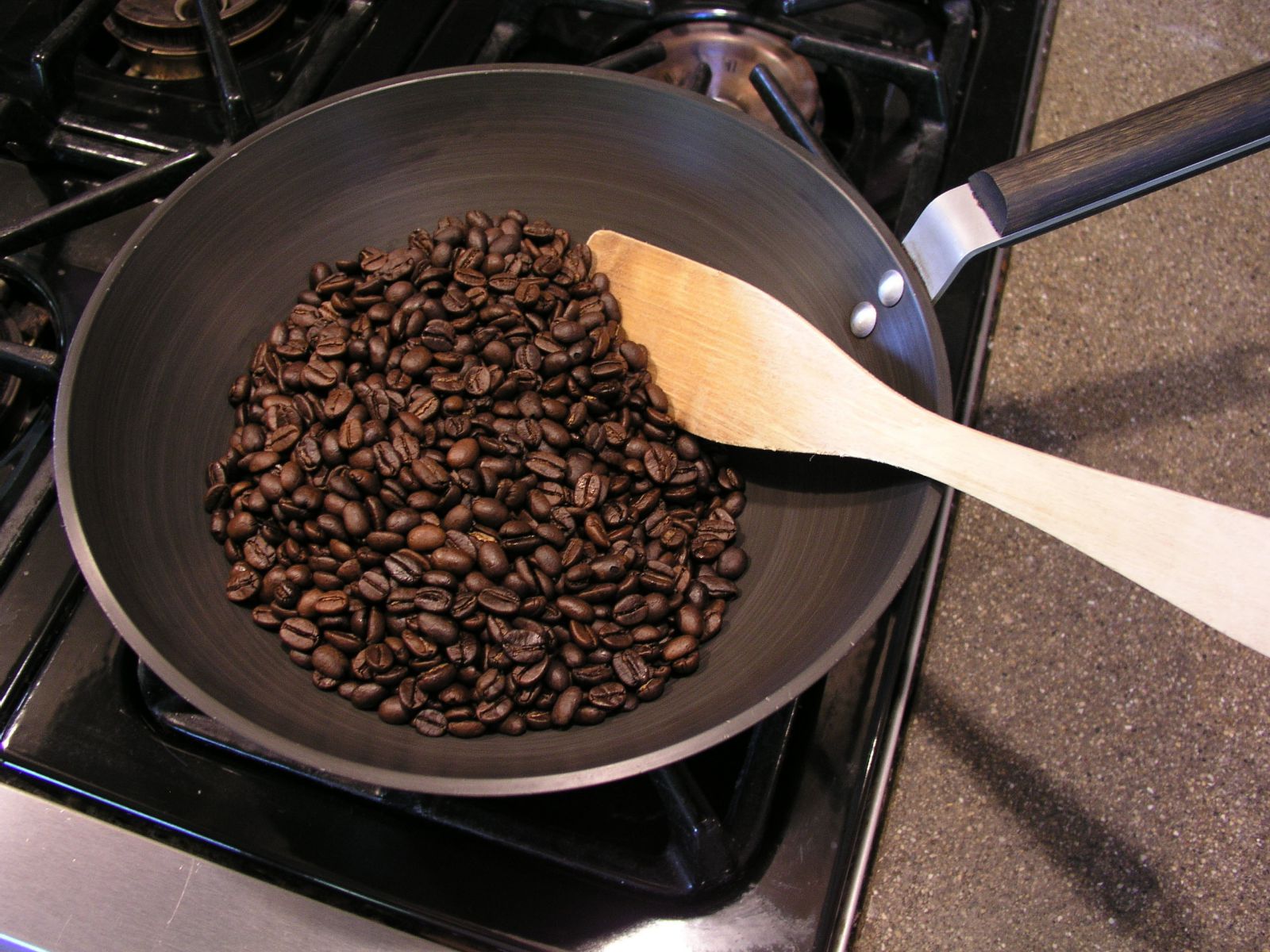
Сковорода должна быть абсолютно сухой и чистой
При обжарке кофе выделается углекислый газ, этот процесс длится даже после того, как зерна сняли с огня. Поэтому свежеобжаренным зернам нужно дать полежать около 12 часов, и только потом засыпать их в контейнер или отправлять на перемалывание.
Если в кофе скопится слишком много газа, крышку контейнера может «выбить», к тому же газ негативно повлияет на вкус напитка. Чтобы полностью «заматереть», набрать вкус, тело и аромат, зернам нужно порядка 24 часов. С другой стороны, забывать про обжаренные зерна дольше, чем на неделю, тоже не стоит – вкус станет затхлым, несвежим.
Как хранить обжаренные кофейные зерна
Лучше всего – в герметичной упаковке, в темном и прохладном месте. В таких условиях кофе может провести несколько месяцев или даже год.
Но лучше всего обжаренный кофе вообще не хранить, а сразу потреблять по назначению, перемалывая максимум за 2 часа до варки.
Roasting Green Coffee
Roasting green coffee is the process of heating, cooking or drying coffee beans in a coffee roaster in order to transform the physical and chemical properties of the green coffee beans so the desired flavors and aromas of the final cup of brewed coffee can be achieved.
Roast level does not significantly change the caffeine levels.
Caffeine did not undergo significant degradation with only 5.4% being lost under severe roasting.
Source
Chemical Reactions of Roasting — Pyrolisis
Roasting eliminates most of the moisture in the coffee beans and begins a series of chemical reactions known as pyrolisis, changing the chemical composition of the coffee and developing the compounds associated with the flavors and aromas of the brewed coffee.
The Skills of the Roastmaster
The skilled roastmaster strives to apply the proper temperature for just the right amount of time to bring out the best flavors of the particular coffee beans being roasted.
Roastmasters pay close attention to the color level of the roasting coffee beans as they expand and change color, ranging from very light to very dark. As the coffee beans lose moisture, their density also changes.
Effects of Coffee Roasting
Coffee roasting, in various aspects and instances, creates, modifies, and/or stabilizes the fragrance, taste, aroma, sweetness, acidity and body of the coffee.
Coffee Roasters, Roasting Temperature, and Roasting Time
Roasting coffee requires skill as well as a proper coffee roaster. A typical roasting temperature ranges from 370 to 540 °F (188 to 282 °C).
Roasting times vary from about 8 to 20 minutes depending on the size of the roaster and variety, and the beans shrink about 20% by weight as they gain a dark hue and fragrant aroma. Twenty-five pounds of green coffee beans may take about fifteen minutes to roast.
As an example, it takes about eight pounds of coffee cherry to make one pound of roasted coffee (100 lbs. of coffee cherry produces approximately 12 lbs. of roasted coffee).
Caramelization During the Roasting Process
Caramelization is the process that occurs during a certain stage of coffee roasting when simple sugars in the coffee beans are heated to a particular temperature, creating a caramel flavor and color.
Carbon dioxide is a gas that forms in coffee beans during the roasting process; a natural byproduct of coffee roasting. The process of carbon dioxide gases releasing from freshly roasted coffee is known as degassing.
Millstone Slow Coffee Roasting
A custom coffee roasting technique called Millstone Slow is accomplished by the roastmaster listening carefully for distinct popping sounds as the coffee beans expand. This is done in small batches, with the roastmaster carefully sampling each batch to make sure the perfect roast level is being achieved.
Continuous Fluidized Bed Roasting
The process of roasting coffee beans by levitating the beans on a cushion of hot air is known as continuous fluidized bed roasting.
Often used during the process of making instant coffee, continuous fluidized bed roasting takes from 30 seconds to 4 minutes and uses lower temperatures. The benefit of lower temperatures is better taste and aroma retention.
Factors Affecting Coffee Roasting Time
Total roasting time for whole bean coffee varies depending upon numerous factors such as the the type of roast required, the quality of the coffee beans, their moisture content, and grade. Also affecting roasting time is the age of the coffee beans as well as the weather conditions where the roasting is being done.
The roastmaster pays attention to the roasting time and temperature as well as more subtle considerations such as the appearance and smell of the coffee during roasting.
First Crack and Second Crack
The roastmaster also listens for the popping sounds of the roasting coffee. These distinct “cracks” of the coffee beans occur at particular roasting stages, and there is a first crack and a second crack.
The first crack occurs at about 385 to 400 degrees Fahrenheit, typically just several minutes after the roasting begins. The coffee beans visibly expand in size as they crack, crackle, or pop. Light Roast are roasted only until the first crack.
The second crack occurs when the coffee beans reach about 440 to 450 degrees Fahrenheit and the cellulose matrix of the coffee begins to break down.
This occurs usually several minutes after the first crack as the coffee beans once again, crack, crackle, or pop. Coffee beans roasted just to this point are usually considered a Full Roast (Medium-Dark Roast).
Dark Roasts — Denoting the Full Development of the Coffee Beans
Coffee beans roasted to the second crack will be slightly shiny as oils begin rising to the surface. This denotes the full development of the coffee, and the flavor will be spicy, with a heavier body than a Light Roast or Medium Roast. The roast flavor is evident.
Coffee Roast Profiles — Standardization in the Roasting Industry
In general there is very little standardization in coffee roasting (e.g., roast types, roast profiles, and how the various roasts are produced). The roast profile of a coffee is a graph of the temperature of the coffee beans during the time of the coffee roasting.
The Four Primary Types of Roasts
The primary factor in determining roasting time is the type of roast required, and these can be generally divided into four types ranging from Light Roast to Medium Roast to Medium-Dark Roast to Dark Roast.
Light Roasts are also referred to as Cinnamon Roast, Half City Roast, Light City Roast, and New England Roast.
Medium Roast s are also referred to as American Roast, Breakfast Roast, Brown Roast, City Roast, Medium-Brown Roast, Medium High Roast, Regular Roast, and Standard American Roast.
Medium-Dark Roasts include After-Dinner Roast, Dark-Brown Roast, Full-City Roast, Full Roast, Light Espresso Roast, Light French Roast, High Roast, North Italian Roast, and Viennese Roast.
Dark Roasts are also referred to as Black-Brown Roast, Continental Roast, Dark French Roast, Double Roast, Espresso Roast, European Roast, French Roast, Heavy Roast, Italian Roast, Italian Espresso Roast, Neapolitan Roast, New Orleans Roast, South Italian Roast, Spanish Roast, Turkish Roast, Very Dark-Brown Roast, and Vienna Roast.
Fine Specialty Coffee
LearnAll About Coffee including coffee plants and coffee cherry, and full descriptions of all of the world’s top coffees. This includes Organic Coffee, Fair Trade Coffee, Bird Friendly Coffee and Shade-Grown Coffee.
Coffee Makers and Espresso Machines
Also included are full details about Coffee Makers and Espresso Machines as well as Instant Coffee and Decaffeinated Coffee.
You can also learn about coffee harvesting and processing, grinding, and packaging, coffee storing, brewing, and all about the coffee beverage itself including Espresso.
The 4 Main Types of Coffee Roasts
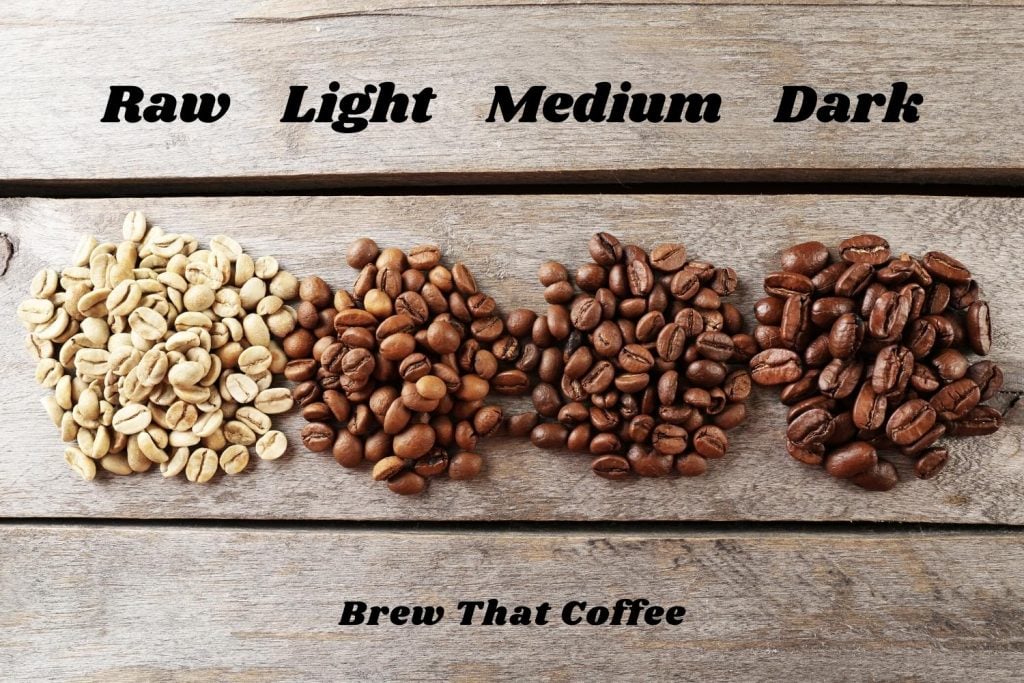
Wondering about the different types of coffee roasts? First, let’s talk about what coffee roasting is and why we do it.
Coffee roasting is the process of treating coffee seeds (green coffee) by heating them until they are roasted. The roasting process causes chemical changes in the seed, which results in the seed changing color, developing a smokey taste and aroma, and losing weight.
The degree to which green coffee beans are roasted affects the flavor and body of the resulting roasted coffee. Unroasted (green) coffee contains abundant naturally occurring carbon dioxide gas cells, which cause the green beans to puff up when roasted.
The degree of roast has an effect on flavor and body because, at different temperatures, chemical changes take place in the seed. The roast has a direct effect on weight loss, which in turn affects the appearance of the coffee.
Roast is traditionally described using four groups-light, medium, medium-dark, and dark roast.
Table of Contents
Types of Coffee Roasts
Here are the four main types of coffee roasts you need to know, along with their alternative names.
Light Roast

A light roast coffee bean is light brown in color and doesn’t have any oil on its surface. The acidity in this roast is more pronounced than in the others.
For those who love caffeine, you should know that light roasts contain the highest amount of caffeine of all the roasts.
Cinnamon Roast
Cinnamon roast typically refers to coffee beans that were removed from the heat soon after the first crack. Although it sounds like a flavored coffee, there is no flavor of cinnamon to this roast. The color just happens to be a light cinnamon shade.
Roasting temperature: 196 degrees Celsius
New England Roast
The New England roast goes slightly further in the roasting process than the cinnamon, resulting in a barely darker color.
Roasting temperature: 205 degrees Celsius
Other common names of light roasts: light city, half city, white coffee
Medium Roast

A medium roast bean has a medium brown color and tastes a little sweet compared to light roasts. The flavor is more balanced as the bean has lost some acidic flavors. In trade, it has gained more smokiness and aroma.
Many will argue that medium roast is the most flavorful of all the coffee roasts. It has a lovely in-between flavor that isn’t too acidic and isn’t too bitter either.
American Roast
Some consider the American roast to be a light roast, while others will say it’s medium. This should clue you into this roast being an in-between light-medium type.
Roasting temperature: 210 degrees Celsius
City Roast
A city roast is closer to what you would expect a medium roast to taste like. It is a medium brown color with pronounced acidic flavors. Some describe this kind of coffee as ‘bright’.
Other common names of medium roasts: regular roast, breakfast roast
Medium-Dark Roast
A medium roast bean has a richer brown color than a medium roast. Bittersweet flavors start the emerge, and acidity is completely removed.
Full City Roast
Full-city roast beans are on the verge of hitting the second crack. If you want to take things a step further, opt for a full city plus roast, which ventures into the dark roast territory.
Roasting temperature: 225 degrees Celsius
Other common names of medium-dark roasts: after dinner roast, light espresso, light French
Dark Roast

A dark roast bean has an oilier appearance due to the oils that have come to the bean’s surface during roasting. Instead of having an acidic flavor like light roasts, it has a bitter taste instead. At this point, the original flavors from the bean’s raw state have been removed.
Vienna/Viennese Roast
The Vienna roast is where the quintessential dark roast flavors like chocolate and smoke come into play. It is also where coffee beans start to lose a lot of their original tasting notes. Vienna roast goes past the second crack halfway to the third.
Roasting temperature: 230 degrees Celsius
French Roast
More chocolatey and smokey flavors come to life in the French roast. French roasted coffee beans are known as double-roasted.
Roasting temperature: 240 degrees Celsius
Italian Roast
You can expect more of a burnt taste from an Italian roast. It will be rather dark in color and will have almost zero flavors in common with its original raw bean.
Roasting temperature: 245 degrees Celsius
Other common names of dark roasts: full city +, Spanish roast, New Orleans roast, Continental roast, Neopolitan, European, and espresso roast.
Which Coffee Roast is Right for You?
Choose Light Roast…
- You want to taste all the nuances of your coffee.
- You enjoy acidic, floral, bright, and fruity flavors.
- Complex flavor profiles are fun and exciting to you.
- Light roast has the most antioxidants.
Choose Medium Roast…
- You want a balanced cup that combines the toasty comforts of traditional dark roast coffee with the variety of flavors light roast offers.
- You are making coffee for a group with varying preferences.
- You like a darker roast but want to minimize the antioxidant loss.
Choose Dark Roast…
- You easily get acid reflux.
- You want coffee that’s smokey, chocolatey, nutty, and bold.
- Its unique potential benefits for red blood cells and weight loss interest you.
- You crave the traditional coffee aftertaste.
Now that you know what the roasts are, how about learning some brewing methods?
What Does Coffee Look Like Before Roasting?

Green coffee beans
Green coffee beans are coffee beans that are in a raw state or unroasted. They have a much different texture and look than roasted beans. Roasting is the process of heating coffee beans to a very high temperature which turns them from green to brown in color. It also changes the flavor and smell of the green coffee bean. When you brew coffee, you extract the flavors and oils from the roasted beans to create your beverage.
Why don’t we just drink unroasted coffee beans?
Unroasted coffee beans have a very hard exterior and do not taste good. They don’t taste much like coffee and can even be considered bitter or chalky tasting.
How hard is it to roast your own beans?
Roasting coffee beans is easy enough to try. However, it takes years of practice to become skilled. Since the beans can be a bit finicky about temperature, a matter of seconds can make the difference between a good and bad batch.
Still, many people find roasting their own beans to be very satisfying. By roasting your coffee, you gain complete control of the turnout. You can save money since raw coffee beans cost less than roasted beans.
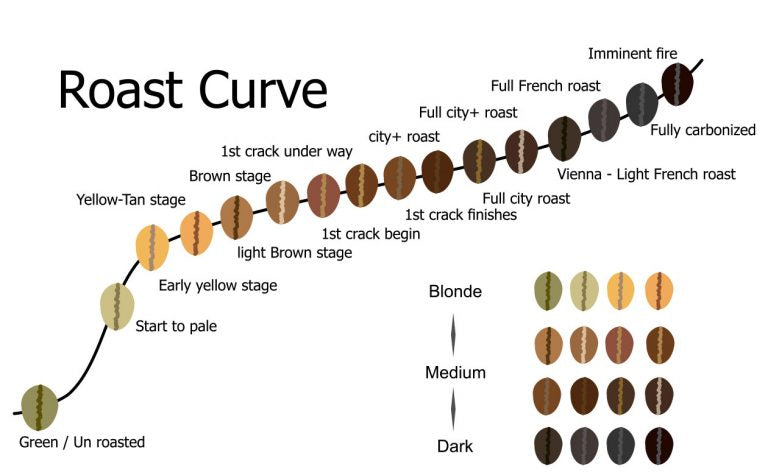
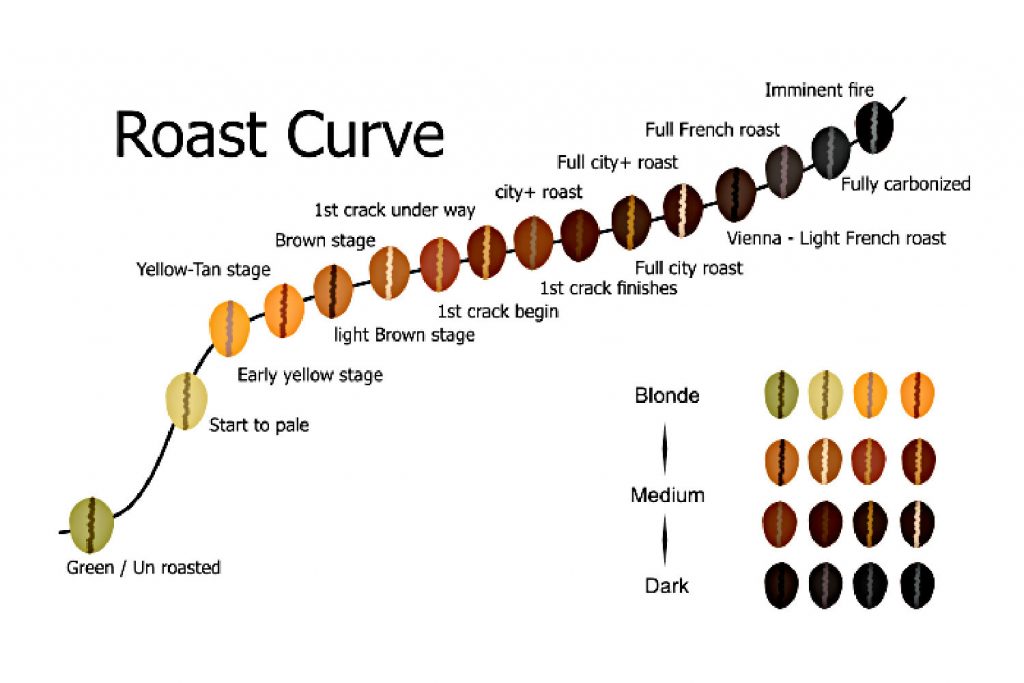
Coffee Roasts Chart
This chart will give you an idea of the types of coffee roasts, and how far along each one is in the cooking process.
The Phases of Coffee Roasting
The phases of coffee roasting vary a bit, depending on factors such as altitude, room temperature, and type of coffee bean.
Generally, you can expect an endothermic phase, an exothermic phase (leads to the first crack), a second endothermic phase (leads to the second crack), and this continues on with the coffee beans getting darker and darker.
Video: The Coffee Roasting Process Explained
Here is an informative video on the types of coffee roasts and how roasters make everything happen.
Final Thoughts
Well, that’s it! Those are all the types of coffee roasts you can expect in the coffee world. They are all delicious in their way, and it takes a little experimentation to figure out what you like.
So don’t be shy, and get adventurous with your beans. If you feel a bit extra, you can start roasting coffee beans yourself. Who knows? Maybe your favorite roast is an unlabeled in-between roast you would have never otherwise tried.
1 thought on “The 4 Main Types of Coffee Roasts”
You are doing great here about roasting description and i also believe arabica bean can give better roasting experience as well.
Leave a Comment Cancel reply
This site uses Akismet to reduce spam. Learn how your comment data is processed.