Refresh Rate vs. Motion Rate: Full Comparison
Motion Rate is a marketing term created by Samsung to use alongside refresh rate. The market for screens has always been competitive and offering image technology for better clarity on Television is hard to market against terms consumers already recognize as high-performance indicators like 120Hz or 240Hz refresh rate gaming monitors and TVs.
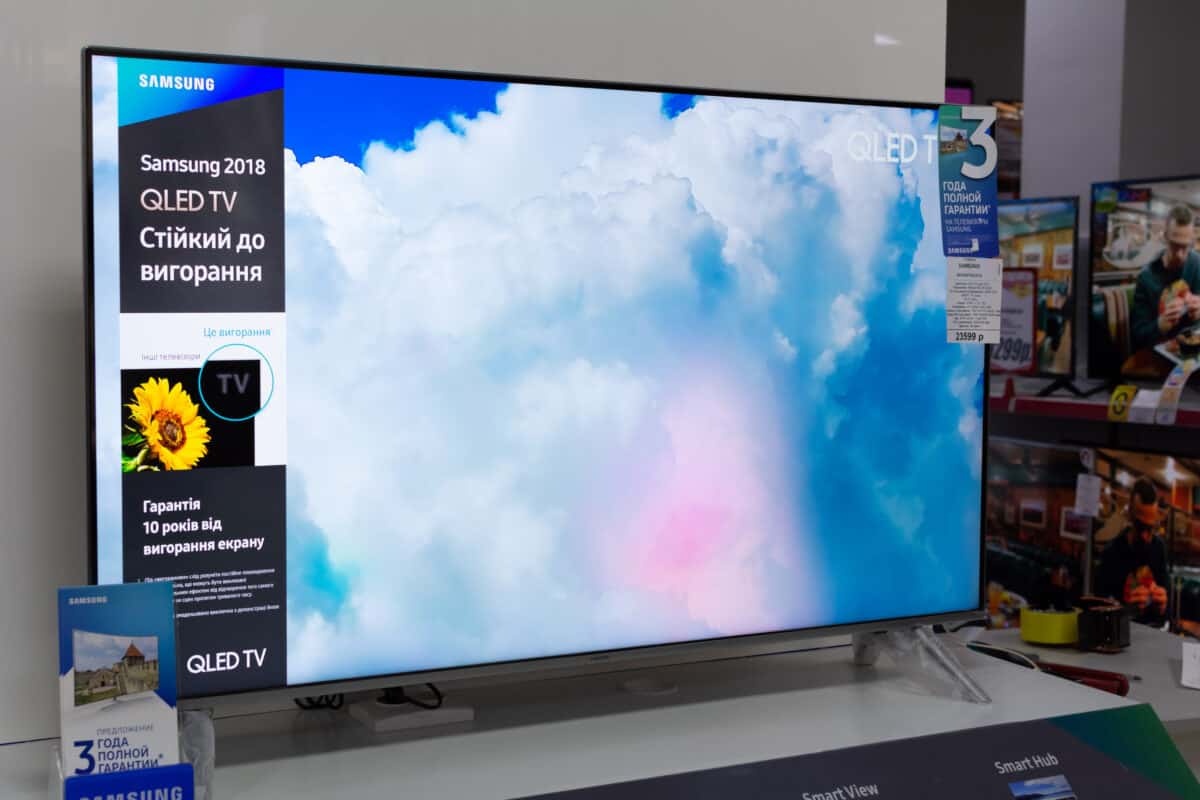
QLED TVs are a proprietary product of Samsung with a 200Hz refresh rate.
In an effort to capture this recognition, Samsung’s marketers created the term Motion Rate. It was meant to stand for the overall speed at which a screen could send a live feed through image processing and redrawing the screen. Unfortunately, the term was used to try and compete directly with technology with fast refresh rates. As 120Hz Motion Rate is not as fast performance as 120Hz Refresh Rate, it’s easy to understand why the term is not widely adopted. Other than both using Hz measurements, they don’t have many similarities.
What Is Refresh Rate?
Screens, whether used in a computer monitor or television set, use a process of showing millions of individual still-frame images one by one to imitate animation and movement. For this purpose, every screen is “drawn”, “erased”, and “redrawn”. In video games, the speed of this process is known as frames per second. With screens, the speed of “redrawing” is known as the refresh rate. The higher the refresh rate is the faster the physical monitor can draw images. This leads to a clearer image and a more immersive experience.
When a refresh rate is too low, the video that plays can seem to have bad motion blur. It can even sometimes appear to skip frames.
Motion Rate vs. Refresh Rate
There are a few different types of Motion Rates other than Samsung’s own. LG created a version known as TruMotion. Sony has MotionFlow XR and XR Motion Clarity. TCL uses Clear Motion Index. Vizio claims to have an “Effective Refresh Rate.” The reality is that companies are attempting to use software techniques to make up for the refresh rate. In some cases, the Motion Rate is just an added value proposition for the product.
That doesn’t mean it’s useless. While the refresh rate is a static attribute of a screen, Motion Rates are a set of techniques used to get around the downfalls of a lower refresh. When comparing refresh rate to motion rate, companies like to claim the motion rate as twice the refresh rate. That means a 120Hz Motion Rate is likely just a 60Hz Refresh Rate. It also means 240Hz Motion Rate is only 120Hz Refresh Rate.
Multiple screens display a variety of images at 60hz vs. 120hz refresh rate.
That doesn’t make them bad options, however. Here are two of the different technologies used in Motion Rate screens:
- Black Frame Insertion (BFI): This is a technique where some manufacturers insert a black frame in-between images to reduce motion blur. Each black frame lasts a fraction of a second but introduces contrast that helps improve motion clarity. BFI can decrease screen brightness.
- Frame Rate Interpolation: Frame Rate Interpolation is an image processing technique that simulates additional frames per second by generating “unreal” frames based on the frames it’s placed between. This has been referred to as the “soap opera effect”.
Refresh Rate vs. Motion Rate: Side-by-Side Comparison
| Refresh Rate | Motion Rate | |
|---|---|---|
| What it is: | Marketing term used to describe image processing | Measurement of screens “redraw” speed |
| Primary use: | Showcase TV/Monitor motion clarity | Showcase TV/Monitor motion clarity |
| Conceived: | 2016 | 1941 |
| Initial release: | 2016 | 1941 |
| Technical committee: | Samsung | NTSC |
| Influential developers: | Samsung | NTSC |
| Open format: | No/Yes | Yes |
| Technologies influenced: | TruMotion, MotionFlow, Clear Motion Index, Effective Refresh Rate | Desktops, laptops, smartphones, tablets, VR headsets |
Similarities and Differences
Similarities
- Both indicate the motion clarity of a screen.
- Both use refresh rate as a metric.
- Both are performance indicators.
Differences
- Refresh rate is a technical and physical attribute of a screen. Motion Rate is a descriptive term meant to encapsulate software techniques used to improve motion clarity.
- Motion Rate is often measured as twice that of the actual refresh rate of a screen. For example, a 120Hz Motion Rate is typically a 60Hz refresh rate.
Refresh Rate vs. Motion Rate: Which is Better?
A good refresh rate can be crucial to gameplay, but even for most gamers, 240hz is unnecessary.
Gaming
For PC Gamers and console gamers alike, a true higher refresh rate is the best option. Games are rendered as-is and external software enhancements may improve the image, but reduce true accuracy. As PCs with adequate dedicated GPUs can handle 120 fps and higher, 120Hz and 240Hz monitors can display every frame of it. Each extra frame is detailed information that improves the player’s game and provides competitive advantages.
Sports and Entertainment
This all comes down to the source of your entertainment. Most TV channels send out 24-30 fps. 30 frames per second is the standard frame rate for shows broadcast in the National Television System Committee (NTCS) format. A natural performance of 120Hz refresh rate on a TV for 30 fps broadcasts isn’t going to improve the viewing. However, 120Hz Motion Rate with frame rate interpolation can. The extra clarity added is what is often referred to as the “soap opera” effect.
Office-Use and Home Computing
For office use that mostly revolves around data input and Microsoft Office applications, it truly does not matter. While you may enjoy a high-performance monitor to work on, you could easily get the job done with a 60Hz or 30Hz display. As input accuracy is more important than image post-processing, there’s no need for Motion Rate technology.
Top Devices For Optimal Motion Rate
There are different components that affect motion rate. Here are the different types and the top choices for each one:
- Graphics Cards: If a graphics card has a high frame rate, then the motion rate will also be good. A popular, top-of-the-line card is the GeForce RTX 3080.
- Consoles: The PlayStation 5 and the Xbox Series X both have a 120Hz output that allows you to get the most out of your viewing with a solid motion rate.
- 120Hz TVs and Monitors: Computer monitors and TVs that have a refresh rate of 120Hz will also have a fantastic motion rate. Two popular options are the Sony X90J and the Samsung Q90A TVs.
Refresh Rate vs. Motion Rate: Six Must-Know Facts
- Refresh Rate is the measurement of the speed at which a screen can redraw the image shown.
- Motion Rate is a term used to describe image processing techniques that provide better motion clarity.
- Motion Rate is measured as twice the true Refresh Rate value.
- Both Motion Rate and Refresh Rate are measured in Hz.
- The optimal refresh rate for most uses is 120Hz.
- Motion Rate has sometimes been referred to as a “fake” refresh rate.
Up Next
-
— Refresh rate is particularly important for gaming and video streaming. Here are our top five picks for best monitors if refresh rate is important for your setup. — Do you actually need a refresh rate above 120Hz? Find out here if you need 240Hz performance. — Did you know that there are different kinds of refresh rates? Here are two explained.
The image featured at the top of this post is ©Gorodenkoff/Shutterstock.com.
Refresh Rate vs. Motion Rate: Full Comparison FAQs (Frequently Asked Questions)
What is more important refresh rate or motion rate?
In the long term, refresh rate is far more important. As Motion Rate is a descriptive term created by Samsung’s marketing department, it doesn’t have the same base attribute status as refresh rate. Motion Rate usually means a screen has image processing techniques to improve motion clarity like frame rate interpolation or black frame insertion. For VR or PC usage, a higher refresh rate is better.
It may surprise you to learn that Motion Rate capture was created to help boost the performance of shows and movies recorded at the NTSC standard of 30 fps as well as to improve motion clarity without bumping the actual refresh rate. As broadcast television isn’t likely to increase the frames per second of recording, image processing technology can make better use of your 60Hz refresh rate screen for 30Hz presentations.
Is the clear motion rate the same as the refresh rate?
No. Clear Motion Rate is a term used by Samsung to encapsulate the combination of a screen refresh rate with software image processing techniques. Clear Motion Rate is often measured as twice the value of the true refresh rate. That means a 60Hz refresh rate TV will have a 120Hz Clear Motion Rate. This is because of frame rate interpolation which generates an “unreal” frame between every frame as transitions. This doubles the frame output, but half of the shown frames are “unreal” frames created from the original context.
Is 120Hz motion rate good?
120Hz Motion Rate is good, but 120Hz Refresh Rate is better. It comes down to what the screen is going to be used for. While both have the same 120Hz, there are some important differences to consider between what the two different terms are describing. Motion Rate is a set of image processing technology that improves upon the true refresh rate with frame rate interpolation. With a higher true refresh rate, there is just no need for a motion rate to compensate.
In the bargain deals of TVs, 120Hz motion rate for basic usage isn’t bad. In 2022, there aren’t really any truly bad TVs or monitors. Having said that, always try to keep the intended use of the screen in mind when purchasing a new one.
Is motion rate 120 or 240 better?
The higher the Motion Rate, the better. As Motion Rate is measured as twice the refresh rate, a 240Hz Motion Rate would include a 120Hz true refresh rate. That’s double the performance of 120Hz Motion Rate which only has a 60Hz true refresh rate.
Lisha Pace, Author for History-Computer
After a career of working to provide opportunities for local communities to experience and create art, I am enjoying having time to learn and write about science and technology. I love science fiction — especially the speculative variety — and enjoy anything that has to do with NASA and space. Robotics and revolutionary inventions that change our quality of life for the better are also of great interest. I also enjoy reading, discovering books to add to my library, collecting and playing vinyl, taking walks by the lake with my husband and little dog, and listening to my son’s music.
Popular Articles

Alexa vs. Google Home: Which One is Better?

10 Reasons to Buy an Anker NEBULA Capsule Mini Projector Today
Motion Rate Vs. Refresh Rate: Fake Marketing BS?
When 120Hz TVs came out, the difference in the picture was amazing. Shoppers simply had to look for a 120Hz refresh rate to get the best picture quality for sports and action movies.
Then manufacturers came out with something called “Motion Rate” to make things more complicated.
So what’s the difference between motion rate and refresh rate?
Is it all just marketing hype to sell you a better product?
When buying a TV, terms like LG TruMotion 240, Sony MotionFlow 960, and Samsung Motion Rate 120 may seem ambiguous.
This article will help clear all the confusion.
Let’s get started.
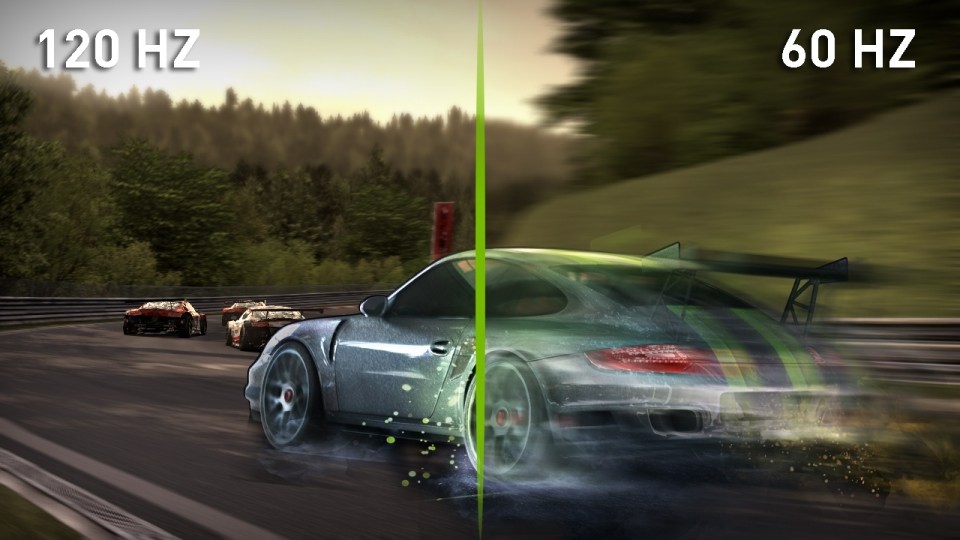
What Is Refresh Rate?
Televisions and computer monitors refresh their images thousands of times each second. To quantify that in a way that’s easy for consumers to understand, they use a unit called Hertz, equal to one cycle (refreshes) per second.
For example, if an image is redrawn 120 times in a second, the rate is expressed as 120 Hertz or 120 Hz.
60 Hz was the old television standard for many years, but we’ve come a long way since then. Typically speaking, the higher the refresh rate, the clearer and sharper the image, and the less flickering you’ll see.
Some high-end gaming monitors have already broken 200Hz refresh rates, so it’s only a matter of time before we see that start to appear on televisions.
For now, the most common refresh rates on TVs are 60Hz and 120Hz…even for high-end TVs.
What Is Motion Rate?
By comparison, motion rate is a much newer concept, developed mainly by the manufacturer’s marketing department.
Introduced by Samsung a few years ago, it uses software to enhance the image’s ability to display fast-moving objects smoothly.
For this article, I will group a lot of similar technology under the term “motion rate.”
- Samsung Clear Motion Rate
- LG TruMotion
- Sony MotionFlow
- TCL Clear Motion Index
- Hisense Motion Rate
- Vizio Dynamic Motion Rate
While refresh rate measures the number of times the TV panel can physically redraw the image per second, motion rate also considers software and AI enhancements. In general, the Motion Rate of a TV is double the hardware refresh rate.
The easiest way to explain this is that it’s similar to comparing the optical zoom and digital zoom on your camera. Optical zoom is all about the lens itself, while digital zoom is software that mimics a higher zoom, but it’s not quite as good.
Previously, you could use the refresh rate to get a good idea of how smooth an image would be. Faster refresh rates were critical when watching sports and action movies.
With a higher refresh rate, there’s less motion blur around fast-moving objects. You can clearly see the player’s name and jersey number, even when running or skating.
The idea was that although the refresh rate was significant, it wasn’t the only factor when discussing motion clarity.
Motion Rate Vs. Refresh Rate: According to TV Manufacturers
Even though “motion rate” is marketing hype, there’s still some value in understanding the technology behind it and how to read the numbers.
Different TV manufacturers have different ways of getting you the smoothest picture possible. But all of them will factor in the panel refresh rate, image processor speed, and backlight technology.
Here are some examples:
1. Samsung: Clear Motion Rate
Samsung was one of the first manufacturers to start using the term ‘motion rate,’ they’ve advanced it for their 4K and 8K TVs.
Usually, the motion rate is twice the TV’s native refresh rate. Therefore, a motion rate of 120Hz means the TV has a native refresh rate of 60Hz, while a motion rate of 240 means the native refresh rate is 120Hz.
The cheapest TVs have a Motion Rate of 60, indicating that the native refresh rate is 60Hz.
2. LG: TruMotion
Today, LG lists their TruMotion number followed by the native refresh rate of the panel. It’s easy to interpret because the native refresh rate indicated is double the actual one.
For example, TruMotion 120 means a native refresh rate of 60 Hz, while TruMotion 240 means a native refresh rate of 120 Hz.
In most cases, they use the short form of TruMotion—TM.
3. Sony: MotionFlow XR & XR Motion Clarity
With MotionFlow, Sony used to use an arbitrary scale to try to inflate their numbers.
Thankfully, they’ve stopped doing this for their current TV lineup and reverted back to using actual refresh rates. They still list what motion smoothing technology the TV has, but listing the real refresh rates makes shopping for a new TV significantly easier than it used to be.
If you’re looking at an older Sony TV, the number 240 in Sony represents a native 60Hz native refresh rate.
Anything higher than that can usually mean a native refresh rate of 120Hz. Even a Motionflow XR 1440 has a native refresh rate of 120Hz.
4. TCL: Clear Motion Index
TCL doubles the actual refresh rate. For their cheapest or smallest models, 60/120Hz CMI, the native refresh rate is usually 60Hz.
All current TCL models have a refresh rate of 60Hz, except for the 75-inch 6 Series, which has a native refresh rate of 120Hz. The 75-inch 6 Series is their most expensive TV.
5. Vizio: Effective Refresh Rate
Just like most other TV manufacturers, Vizio has a term they use to indicate their refresh rate. Their Effective Refresh Rate is twice the actual native refresh rate.
Often, it includes a Clear Action number, which can be confusing.
But in a nutshell, this is triple the ERR, meaning it’s six times the native refresh rate. In the real sense, it doesn’t mean much as far as the refresh rate is concerned.
How to Determine a TV’s Refresh Rate
If you’re more interested in a TV’s native refresh rate than its motion rate, you may have to do a little digging.
Most TV manufacturers will boldly list the inflated motion rate number in their ads.
However, you’ll usually need to dig through the product specifications to find the TV panel’s native refresh rate.
Additionally, you could go the extra mile and look for a more detailed TV review from an independent source.
Personally, I recommend RTINGS for television reviews. They purchase all of the TV’s themselves, so they won’t be swayed to say something nice about a TV just because they got it for free.
Motion Enhancement Technology
TV manufacturers use certain technologies to improve motion clarity.
Two primary techniques to enhance this include:
1. Black Frame Insertion (BFI)
Some manufacturers insert black frames between the actual frames to improve motion clarity.
While this may seem counter-intuitive, it happens so fast that the human eye can’t even notice the black frame. Because it only lasts a tiny fraction of a second, the blur effect due to fast-moving objects is much reduced.
That said, Black Frame Insertion has its downside. Once you enable it, the overall image brightness dramatically decreases.
An alternative to Black Frame Insertion, common in gaming monitors, is the Backlight-Strobing technology. This is an automation where the backlight turns on and off to reduce motion blur. In this case, there’s no need to insert black frames.
Backlight strobing usually makes the viewing experience smoother.
2. Frame Rate Interpolation
Frame Rate Interpolation, commonly called the “soap opera effect,” works similarly to black frame insertion in that the image processor simulates additional frames per second.
However, instead of a black frame, the processor in the TV generates “unreal” frames, depending on the next and previous frames.
Most people call it the soap opera effect because it makes everything appear unusually sharp and crisp, like in TV soap operas. In general, people tend to dislike the Frame Rate Interpolation feature.
But for some, especially sports lovers or people who often watch high frame-rate content, it’s a favorite.
If a TV supports this feature, the chances are that you will be able to lower it to a more recognizable look.
Refresh Rate vs. Motion Rate: The Verdict
Most manufacturers will use software enhancements, like black frame insertion or frame rate interpolation, to improve a TV’s motion clarity. To differentiate this from the panel’s hardware (native) refresh rate, they call this the TV’s motion rate.
TV manufacturers use such marketing gimmicks to lead you into thinking that the TV has a refresh rate of 240Hz.
However, that’s not the case. It simply means the TV is 120Hz but can simulate 240 frames per second (240 FPS).
That sounds confusing, and it can be. But remember, you can still compare TVs from different brands using the TV’s native refresh rate. Although you may have to go digging for it in the specifications.
Generally, most TV brand features have the term ‘Motion’ followed by a number like 120, 240, or higher.
It’s safe to assume that a TV with a motion rate of 120 indicates that the TV comes with a 60Hz native panel. On the other hand, the higher numbers mean that the TV features a native 120Hz panel.
Tim Wells got his first computer at the age of ten and hasn’t stopped tinkering ever since. After discovering Android TV boxes in 2013, he created a popular Android PC Review website and guided it to over 8 million pageviews before stepping away in 2018.
After a brief hiatus from the industry he’s back at the helm of AndroidTVNews.com to bring Android TV and TV boxes to the forefront of the streaming world.
When he’s not writing, he spends as much time as he can with his beautiful wife and his bulldog.
Refresh Rate vs. Motion Rate: The Truth Behind Smoother TV Viewing

As we gradually emerge from the confines of our homes and return to our regular lives, many of us have embraced new technologies to enhance our entertainment experiences.
Among these tech upgrades, televisions have played a significant role in transforming our viewing habits. In this blog post, we will delve into the world of refresh rate and motion rate, shedding light on their differences and implications for a truly immersive TV experience.
The Importance of Refresh Rate in TV Viewing
Over the past couple of years, with increased time spent at home, my wife and I decided to upgrade our TVs. We invested in a 65-inch LG NanoCell for our living room. And we decided upon a 43-inch Samsung Class 7 Series LED 4K TV for our bedroom. While exploring the specifications of these TVs, I stumbled upon a crucial factor that sets them apart — the refresh rate.
The LG NanoCell Experience: Authentic Smoothness
The LG NanoCell, boasting a native 120Hz refresh rate, has completely transformed our TV-watching experience in the living room. The vibrant colors and seamless motion brought by the higher refresh rate have turned ordinary TV viewing into a captivating and immersive adventure. With a smoother image display and a refresh rate that redraws the image 120 times per second, the LG NanoCell truly delivers an extraordinary visual feast.
The Samsung Class 7 Series: Motion Rate Magic
In the bedroom, our Samsung Class 7 Series TV with a 60Hz refresh rate but a Motion Rate of 120 presents an interesting contrast. While we initially thought we were getting a native 120Hz refresh rate, we soon discovered the concept of motion rate, which introduces an alternative method to simulate the smoothness of a higher refresh rate.
What Is Samsung Motion Rate, Sony MotionFlow, And LG TruMotion?
TV manufacturers often use confusing jargon for their products. Here’s a guide explaining what Samsung Motion Rate, Sony MotionFlow and LG TruMotion is.
This article has been written by a vetted expert and fact-checked by other experts. The author has been certified as an expert in this topic. Learn more on our about page.

If you’ve been looking for a new TV, you’ve probably encountered terms such as Samsung Motion Rate 120, Sony MotionFlow 960, LG TruMotion 240, etc., and wondered what it all means.
In short, these features use either framerate interpolation or black frame insertion to improve motion clarity on your TV.
What’s confusing the most is when TV manufacturers advertise such features as ‘Motion Rate 120’, which may trick people into thinking that the TV has a native 120Hz refresh rate.
Instead, it’s a 60Hz TV that can simulate 120 FPS (Frames Per Second).

The reason behind all this is simple — marketing. For instance, one might think that ‘MotionFlow 960’ is better than ‘TruMotion 240’ or ‘Simulated 120 FPS’ simply because of the higher number when, in reality, those features are fundamentally the same.
Simulated TV Frame Rate/Refresh Rate
Now, since some TV manufacturers don’t show the real refresh rate on the specifications sheet, you’ll have to look for a detailed review of the TV if you want to know both its maximum supported native refresh rate at a certain resolution and its effective/simulated refresh rate.
TV features such as Sony MotionFlow XR can improve motion clarity by inserting entirely black frames in between the actual frames. Because it only lasts for a fraction of a second, you won’t notice the black frame, while the motion of fast-moving objects will be clearer.
The drawback is that the picture will be less bright when this feature is enabled.
Some gaming monitors with motion blur reduction technology use a similar method called backlight strobing, where the backlight turns on/off instead of inserting black frames to deliver a smoother viewing experience.
What Is Framerate Interpolation (Soap Opera Effect)?
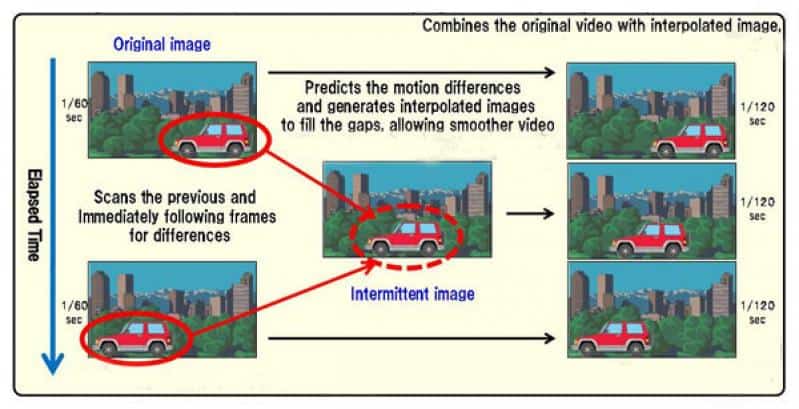
Framerate interpolation works similarly to BFI, but instead of black frames, the TV’s processor generates ‘fake’ frames based on the previous and the next frame.
Most people don’t like this feature as it makes everything look artificial, resembling TV soap operas, which is why this feature is also referred to as ‘the soap opera effect.’
On the other hand, some people prefer to use this feature when watching sports or content with a high frame rate.
Conclusion
What’s our final take?
Since TV manufacturers are usually unclear about certain display specifications, you should always look for thorough TV reviews and see the native panel refresh rate, effective refresh rate, and the type of technology the TV uses to increase the frame rate.
Joseph has probably spent thousands of hours learning about displays in his free time and prior work experience at HP. He now writes and manages DisplayNinja to ensure it stays as the people’s favorite resource.
Display Ninja is a reader-supported community. When you purchase through links on our site, we may earn a small commission.