Светодиодные ленты белого цвета свечения, RGB, RGBW, CCT, RGB + CCT, что на самом деле выбрать?
Одно из самых популярных — одноцветные светодиодные ленты. Он бывают на напряжение 12В, 24В и 230В — в зависимости от ваших требований. Как следует из названия, это всегда лента со светодиодами, светящимися только одним цветом.
Такие ленты можно регулировать с помощью диммеров с широко-импульсной модуляцией (ШИМ) от 0 до 100% яркости, то есть от полного выключения (приглушенное освещение) до полностью светящиеся ленты. Эти светодиодные ленты очень часто используются в качестве декоративного освещения помещений.
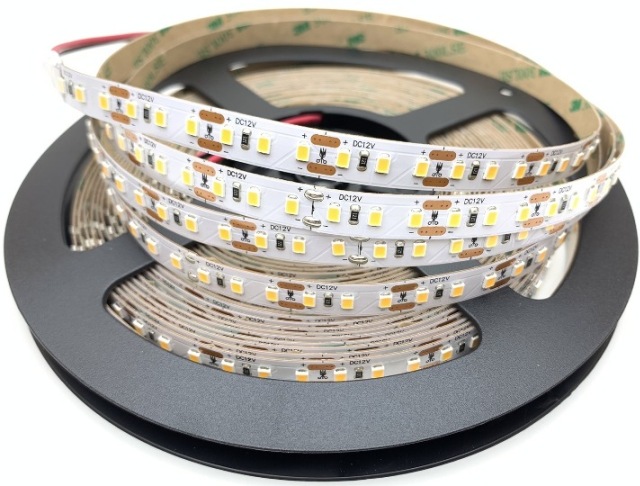
Светодиодная лента 2835, 120LED, 14.4W, 12V, IP20, дневной белый свет
К основным цветовым вариантам можно отнести:
Теплый белый цвет свечения близок к цвету, излучаемому классической лампочкой накаливания. Он более мягкий и уютный, поэтому его очень часто выбирают для гостиных, спален или столовых.
Напротив, холодный белый ближе к свету люминесцентных ламп. Такой свет больше стимулирует мозг и поэтому больше подходит для рабочих мест, для освещения продуктов, коридоров, ванных комнат и т. д.
Дневной свет — это компромисс между холодным и теплым белым светом, и этот свет наиболее близок к естественному дневному свету.
Помимо одноцветных белых лент, бывают также другие цветовые варианты: красный, синий, зеленый, желтый, оранжевый.
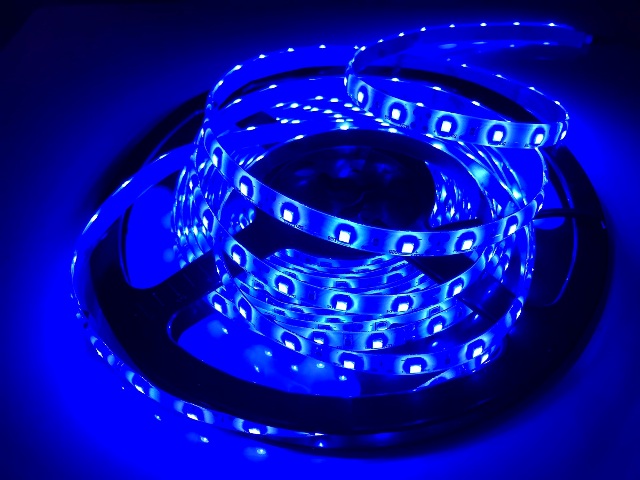
Светодиодная лента синего цвета свечения 3528, 60LED, 4,8W, 12V, IP65
Цветные ленты RGB
Ленты RGB характеризуются тем, что они могут создавать широкий диапазон цветов свечения с помощью драйверов. Каждая микросхема на светодиодной ленте содержит цвета R — красный, G — зеленый, B — синий.
Многие из вас задаются вопросом, могут ли эти ленты также создавать белое освещение. Да это они тоже могут. Белый цвет получается путем объединения всех трех цветов RGB.
Однако вместе они никогда не излучают чистый белый свет, а только холодный белый. Он часто такой свет имеет оттенок синего. Цветные светодиодные ленты RGB также доступны на напряжение 12 В, 24 В и 230 В.
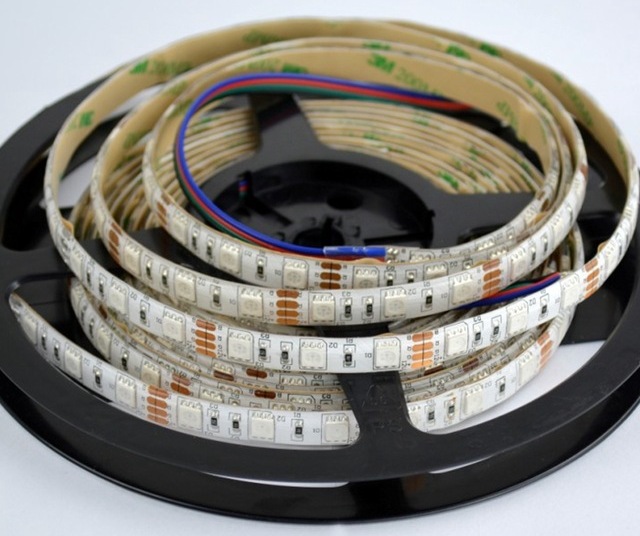
Светодиодная лента RGB 5050, 60LED, 14.4W, 12V, IP65
Цветные ленты RGBW
Светодиодные ленты RGBW — это модернизированные ленты RGB, которые светятся качественным белым цветом.
Как и ленты RGB, эти ленты в чипе имеют R — красный, G — зеленый и B — синий светодиоды, но у них также белый светодиод W.
Вы можете выбрать цветную ленту с белыми светодиодами из трех вариантов свечения:
RGBW + холодный белый ;
RGBDW + дневной белый ;
RGBWW + теплый белый .
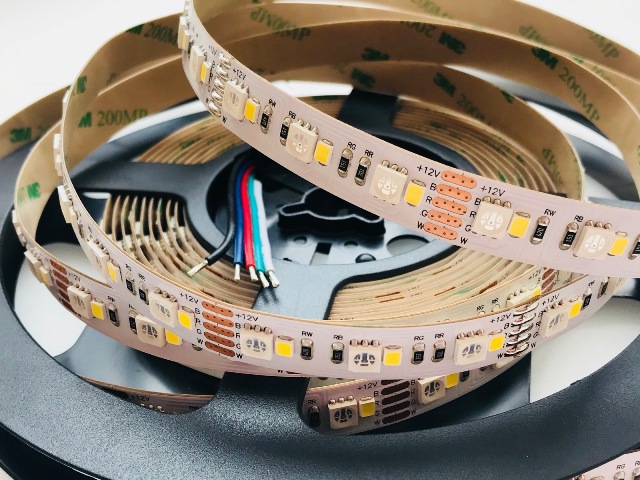
Светодиодная лента 5050-2835 RGBW, 120LED, 25W, 12V, IP20
Добавление отдельного белого цвета значительно упрощает выбор вашего любимого цвета. Чтобы удовлетворить растущий спрос клиентов, эти ленты были разделены на 2 группы:
RGB + W — чип RGB чередуется с одноцветным чипом RGB ;
RGBW 4in1 на светодиодной ленте — это все 4 цвета — красный, зеленый, синий и белый, содержащиеся в одной микросхеме.
В обоих вариантах вы можете выбрать между WW — теплый белый, DW — дневной белый, CW — холодный белый.
Эти светодиодные ленты чаще всего выпускаются в вариантах на напряжение 12В и 24В.
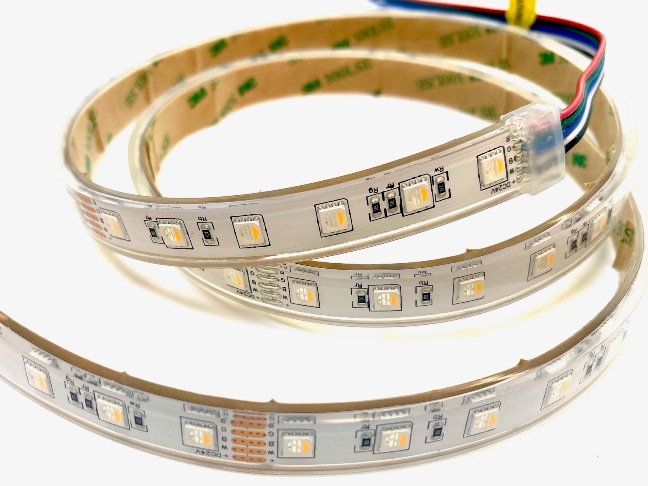
Водонепроницаемая гибридная лента RGBW 4в1, 60LED, 12W, 24V, IP68
Ленты CCT
Светодиодные ленты CCT позволяют устанавливать температуру белого цвета. Эту настройку можно произвести с помощью контроллера, который вставляется между самой светодиодной лентой и источником питания.
Обычно на светодиодную ленту вставляют 2 типа светодиодов теплого и холодного белого цвета. Вы можете использовать контроллер для независимого включения, выключения и затемнения обоих цветов. Когда вы запускаете оба цвета одновременно, две цветовые температуры объединяются, и цветовая температура по умолчанию составляет около 4500K.
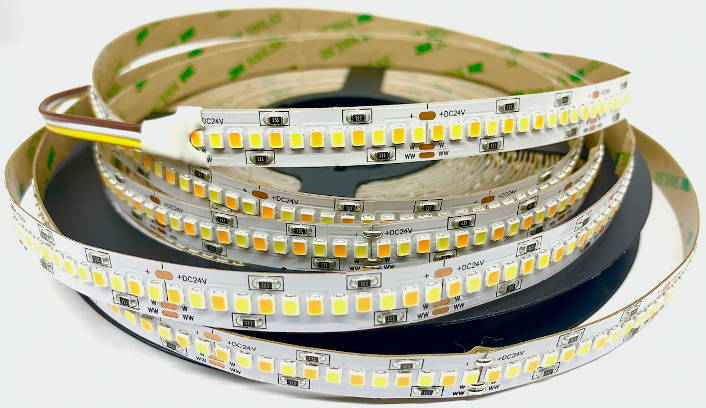
Светодиодная лента CCT 2835, 240LED, 30W, 24V, IP20
Ленты RGB + CCT
Эти специальные светодиодные ленты — лучшее, что вы можете получить. Они объединяют технологии RGB и CCT в одну светодиодную ленту, благодаря чему вы можете установить любой цвет RGB, а также температуру белого света. Такие ленты бывают двух видов:
RGB + CCT — на ленту монтируются RGB и CCT светодиод ;
RGB + CCT 5in1 — новейшая технология, в которой один светодиод содержит как микросхему RGB, так и одновременно микросхему CCT.
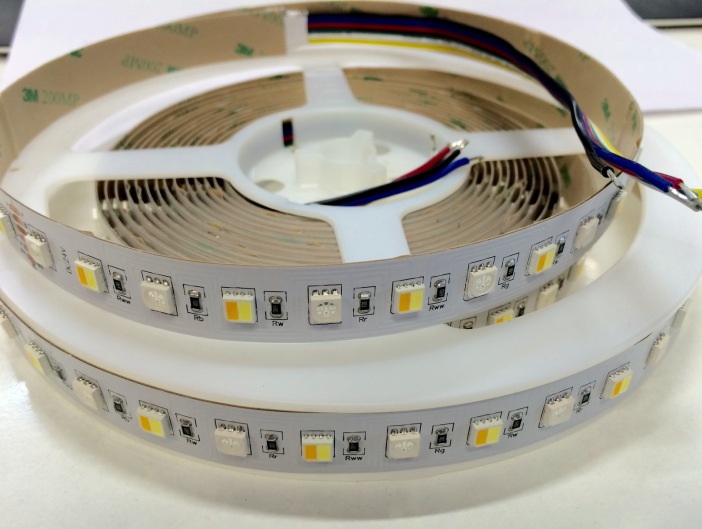
Светодиодная лента RGB + CCT 5050, 72LED, 23W, 24V, IP20
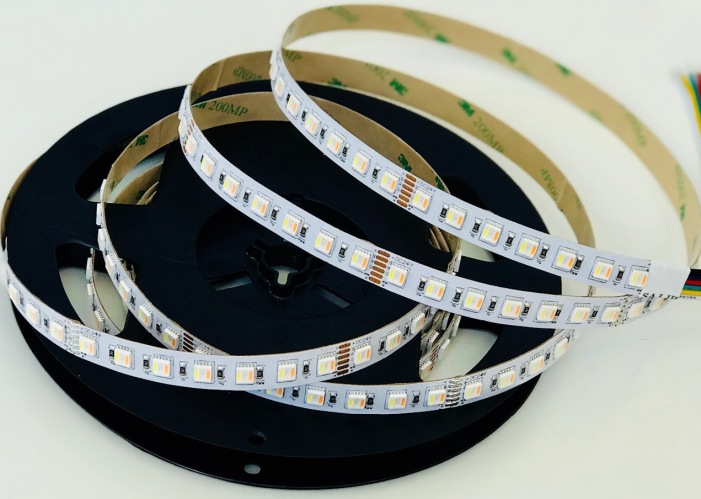
Светодиодная лента 5in1 RGB + CCT 5050, 84LED, 25W, 24V, IP20
Общая информация
Чтобы управлять всеми перечисленными выше 5 типами светодиодных лент, необходимо использовать специальный светодиодный диммер, с помощью которого ленты можно легко включать и выключать, а также регулировать световой поток.
Также нужно использовать соответствующий контроллер для управления цветом света для каждого типа светодиодной ленты, то есть контроллер RGB для лент RGB, а также специальные контроллеры для лент CCT.
Важно внимательно разобраться с входным напряжением каждой ленты (12 В, 24 В) и выбрать для нее правильный источник питания.
Еще одно важное замечание — лучше всего устанавливать светодиодные ленты на алюминиевые профили, основной принцип которых — отвод тепла, выделяемого лентами во время их работы. Таким образом, профили не только защищают ленты от внешних повреждений, но и значительно продлевают срок их службы, так как они не перегреваются.
Дополнительно несколько полезных статей по этой теме:
Где можно купить светодиодные ленты, описанные в статье?
Надеюсь, что эта статья была для вас полезной. Смотрите также другие статьи в категории Электрическая энергия в быту и на производстве » Освещение дома
Подпишитесь на наш канал в Telegram и узнавайте первыми о последних трендах, советах по освещению и технологиях, которые сделают ваш дом более комфортным и стильным: Современное освещение
Understanding the Digital Addressable LED Market

Trying to find the right digital addressable LEDs can become a big challenge! There are many chips, LED types, and even more suppliers in the market. Let me try to share some of our learnings on finding the right digital LED.
Overview
Before diving into the different criteria which you want to apply for selecting the right LEDs for your project, let’s get a general understanding of digital LEDs. Other than the usual classical PWM driven LEDs, digital LEDs can be controlled individually. Thus, a digital LED stripe can show its first LED red, the second LED blue, …
To achieve this, a chain of color commands is send through the data line of the LED strip and each digital LED includes a tiny chip that retrieves its individual color and applies it to the LED.
Finding the right communication protocol
The communication protocol is crucial in how you send commands to the LEDs. Usually, you use a small computer like a Raspberry Pi, ESP32, or Arduino because in most cases you require an SPI output to talk to the LEDs.
If you look at the datasheets of the LEDs, you will realize that there are a lot of different communication protocols. The most famous chip and protocol in the market is the WS281x series (WS2811, WS2812, WS2813, WS2815). You will find a lot of open-source software implementations for the WS281x which makes it so popular.
The crucial part of the protocol is the transfer times which typically look like this:
For the WS281x protocols, Worldsemi has protected its timings and approach. This makes it hard for other chip suppliers to use it directly. Therefore you find a lot of protocols that are different than the WS281x but with their timings still close enough to the WS281x to be compatible with the WS281x.
Let me list a few of the WS281x compatible protocols:
- SK6812 (https://cdn-shop.adafruit.com/product-files/1138/SK6812+LED+datasheet+.pdf)
- TM1814, TM1914 (https://www.superlightingled.com/PDF/TM1814-TitanMicro.pdf)
- UCS2903, UCS2904 (https://datasheetspdf.com/pdf-file/838056/UCS/UCS8903/1)
- APA104, APA109 (http://neon-world.com/uploads/soft/20161102/1478058247.pdf)
A great page to compare the protocols to each other can be found at Advatek.
Colors
One of the crucial points about choosing the right digital LED is the color schema that you want to address. There is RGB, RGBW (W) or RGB + CCT and it is a bit confusing. Let me give you a brief overview:
RGB digital LEDs are the default and allow you to mix your red, green and blue colors. Most of the digital LEDs support the RGB mode like:
- WS281x
- TM1914
- UCS2903
- APA104
RGBW digital LEDs offer another “white” color that allows better and cleaner color creation. Be careful what kind of “white” is supplied with the LEDs, normally you can choose between warm and cold white. RGBW is not yet that common (especially because WS281x do not support RGBW) and this also limits the available software solutions. But libraries like FastLED allow “hacks” to support RGBW and it is, in theory, nothing more than passing another “white” color to the LEDs. The number of digital LEDs which support RGBW is limited:
- SK6812
- TM1814
- UCS2904
- APA109
RGB+CCT
If you require even more “white” color flexibility, you might want to use RGB+CCT (CCT=correlated color temperature). The RGB+CCT LEDs include warm and cold white and allow to use the full spectrum of white. Currently, there is no digital LED solution that brings this 5-channel LED control with it but there is an interesting solution that combines a digital addressable TM1914 RGB chip with two additional white channels: https://www.youtube.com/watch?v=Wf2k2ao_bS4
Power
If you build up larger LED installations you will quickly realize that powering your LEDs will become a challenge. Assuming you drive 500 LEDs (WS2812) and each LED draws at full brightness 50mA at 5V, you require:
500LEDs x 0,05A = 25A
25A x 5V = 125W
This is a lot and requires professional power management. Thus, picking the right LEDs is crucial. For large settings, it might be preferable to move to 12V or even 24V LEDs. With higher voltage LEDs you can reduce the overall power consumption which means you can drive more LEDs and have larger settings. Though, the problem with digital addressable LEDs and 12/24V LEDs is that often LED products at 12/24V just allow controlling 3/7 LEDs at the same time. This is due to the fact that each LED runs at 3V and therefore it is preferred to put multiple LEDs in series. Obviously, if you want to manipulate your LEDs on a very fine-grained level, this will not work out for you.
While there are 12/24V digital LED solutions based on WS2811, TM1814, TM1914, UCS2903, and UCS2904, most of the digital addressable LEDs are running at 5V.
Packaging
Another important criterion is the packaging of your digital LEDs. A lot of digital addressable LEDs like the WS281x, SK6812 and APA10x package the chip and the LED together. This is nice for manufacturing because it makes things easier.
Packaging chip and LED together has the disadvantage that you are not free in picking your preferred LEDs. Therefore there are also digital addressable chips that are independent of the LEDs and can be combined with any other drivable LED. Examples are the TM1814, TM1914 or the UCS290x chips.
Summary
The digital addressable LED market is fast-growing and can be very confusing at times. For your digital LED project you need to find the right combination of protocol, LED type/packaging and power management. In the following list, a short overview of the most relevant solutions is given.
If you miss a protocol or LED type add a comment and I will be happy to enhance the article.
RGB VS RGB-CCT vs RGBIC vs RGB-W vs… (Why So Many?!)
It seems like there’s a new type of RGB that comes out every month. What used to be a simple choice between a few types of LED light is now an endless list full of options.
Are any of these RGB lights even different? We’re going to go over all of the details and make sure that oh, by the end of this article, you are an expert on RGB lighting.
RGB are your standard LED lights that are capable of producing over 16 million colors and a very limited type of white light. Other types of RGB LED lights (including RGB-W, RGB-WW, RGB-CW and more) have enhanced features built around an ability to create more nuanced shades of white light.
Keep reading to learn more about LED color science and all the different types of LED lights you can get for your smart home.
Let’s Start With the Basics: What are Smart LED Light Strips?
Smart LED light strips are one of the most interesting options when it comes to light in your home. These light strips allow you to truly customize how your home’s lighting looks.
Depending on the manufacturer, you can use smart LED light strips to do anything from under cabinet lighting to adding safety lighting to staircases and furniture at night:

A Hue Lightstrip dimmed down to 1 percent
Smart LED light strips can either be plugged into a conventional outlet or they can be connected together to run over longer distances. You can control these LED lights with an app on your phone just like you could any other smart LED light.
You may have seen me say “LED” a lot – this stands for light emitting diode, and it refers to small electronic components that can produce light. LEDs exist in many types of lighting, both smart and “dumb” lights:
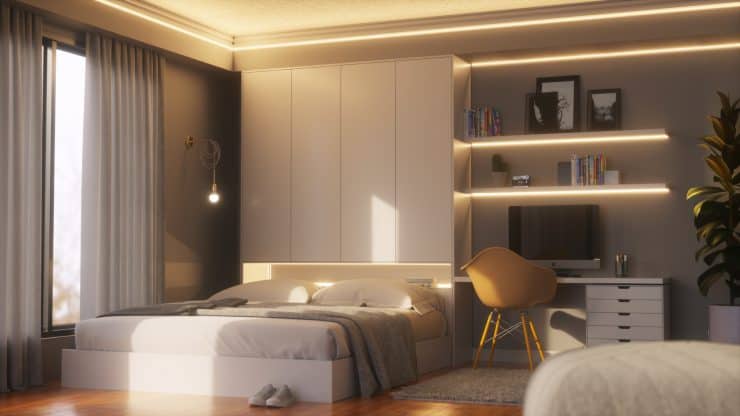
Nanoleaf Essentials A19 light and lightstrips in a bedroom
However the way that the LEDs are configured are especially important for LED light strips, which is why we focus more on light strips in this article. You can read more about general smart light bulbs in my article which explores the three types of Hue light bulbs.
Before we talk about the different types of RGB lighting, we need to talk about the two main types of LED light strips.
Analogue and Digital LED Light Strips
There are two main types of LED light strips. These are known as analog and digital.
Analog light strips have one chip for the entire light strip. These LEDs are connected together in a series and they are all controlled as one. This type of LED light strip is typically more affordable, but it has a more limited range of lighting options. Since all of the lights have to be the same color at the same time, analog LED light strips can’t have more intricate lighting options.
Digital LED light strips are the other side of the equation. Each LED in these light strips has its own chip attached to it. This allows each LED to be independently controlled. This allows you to sequence lighting as well as have a much finer control over lighting effects and color options.
This concept is shown more in one of my YouTube videos, which covers the Philips Hue Lab formulas:
The last thing that we need to touch on before we can talk about the different types of RGB LED light strips is color temperature.
Color Temperature 101
Color temperature is how we measure the color of white light. Yes, we know, it sounds a little strange to talk about the different colors that white light can produce. However, once you see a color temperature chart you won’t be able to unsee it:
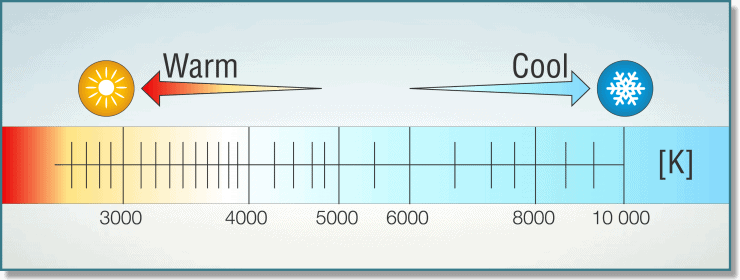
Kelvin light scale covering cool to warm white
Color temperature is measured in kelvin. The color temperature scale goes from 1,000 to 10,000. 1,000 is somewhere around the color of light produced by a dim candle while 10,000 is a bright Blue Sky.
Different types of LED lights can produce a different color temperature of white light. There are even LED lights that can change the color temperature of white light that they produce:

The remote for my LED ring light, which can change the color temperature via the “Mode” setting.
These are particularly useful for photographers and videographers who need to have a fine-tuned control over their lighting.
Now, let’s take a look at the different types of RGB LEDs.
Different Types of RGB LED Light Strips
You’re in for a surprise if you thought there was only one type of RGB LED light. There’s actually a wide range of options when it comes to LED lights. You are a few of the most common types of RGB lights.
These are your bread-and-butter RGB lights. Each diode has the ability to generate red, green, or blue light. It can also generate different values of these lights at the same time. Your standard RGB diode will be able to produce around 16 million different colors.
I list every single different color that can be produced below…
Just kidding. The 16 million different color choices are often depicted through a color wheel within a smart light app:

Changing Hue light bulb color and brightness levels within the app
That might sound like a lot, but there are limitations to your standard RGB light – three of which are explored below.
Limitation 1 – RGB and White Light
The most notable limitation is that these ‘RGB’ lights aren’t that good at producing white light. Your standard RGB LED strip can produce white light, but it’s a very limited and crude type of white light. This LED light produces this kind of white light by cranking up red, green, and blue lights all at the same time. This is much harsher than a dedicated white light would be able to produce.
RGB lights are also bad at producing pigment colors.
Limitation 2 – RGB LEDs and Pigment Colors
In the world of color science, there’s a subcategory of colors known as pigment colors. Brown and pink are two great examples of colors that appear only as pigments. A pigment color is achieved by creating a chemical that absorbs a particular wavelength of light and only lets one wavelength reflect back. A brown color pigment will absorb every wavelength of light besides those needed to create brown as a color.
RGB lights cannot produce color pigments.They might be able to produce colors that are similar to certain pigment colors. You can imagine a light magenta or a very light red that can get close to pink. However, certain colors like brown are almost impossible to achieve with RGB lighting alone.
There is another set of colors that RGB lights struggled to produce.
Limitation 3 – Outside the RGB Triangle
RGB lights operate in what is known as the color triangle. The triangle is made out of red, green, and blue with all of the intersecting points creating over 16 million different colors. However, there are colors that exist outside of this triangle.
There are different standards for the RGB colorspace. However, there are a few colors that typically fall outside of any given RGB triangle. These can include intensely bright greens, bright magentas, and different shades of cyan.
The standard RGB LED lights are going to struggle to produce these colors.
Now that we know all the basics of your standard RGB light, we can take a look at a few of the more specific kinds of RGB LED.
RGB-W is the basic step up from your standard smart lights.
There are two configurations for RGB-W. The first is taking the standard RGB LED and adding a white light emitting diode within the RGB node and the second is created by adding a separate white emitting diode that is connected into the LED light itself. Both approaches wind up having the same effect.
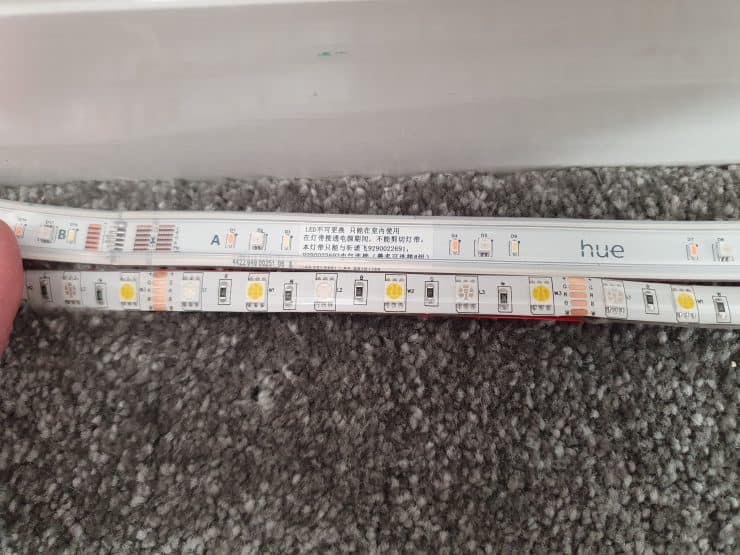
Two smart LED light strips compared and showing the different LEDs that exist on both
The RGB-W LED light is able to produce cleaner shades of white. These whites are more brilliant and have a more accurate color temperature. RGB-W lights tend to have very bright white’s that are above 5,000 Kelvin.
The addition of a white light emitting diode also improves the RGB colors. Colors will look brighter and more vibrant with the addition of the white light emitting diode. As an added bonus, transitioning between colors will appear almost seamless thanks to that additional white light diode.
RGB-WW
We know what you’re thinking, the RGB-WW light has two white nodes instead of just one, right?
That’s not quite the case with RGB-WW LED lights. The naming convention here is just a little bit inconsistent.
RGB-WW lights have the same configuration as RGB-W lights. However, RGB-WW lights have a white light node that is capable of producing warmer shades of light. These white LED nodes produce color temperatures 5,000 Kelvin and lower.
This allows these LED lights to produce warmer shades of white. It also improves the RGB colorspace by making color light richer and giving it more texture.
RGB-CW
Now we’re talking. The RGB-CW light gives us the best of every world when it comes to RGB LED lighting.
Unlike the RGB-WW light, the RGB-CW light has an acronym that actually makes sense. The CW in the name of this light stands for “cool / warm.”
This means that these RGB LED lights contain both a cool and a warm white LED node. What advantages does this give the smart home lighting enthusiast?
You’ll find that the RGB-CW lights are some of the best out there when it comes to light in your home. The big advantage here is that you can select the color temperature that you want your lights to be. While the other two types of LED lighting are locked into either cool or warm color temperatures, these lights can change their call the temperature anywhere along the Kelvin scale.
This is what Philips Hue’s lightstrips offer – they contain groups of three diodes: one is a three-in-one (RGB), the other is warm-white and the other is cool-white:

Diodes on the Philips Hue Lightstrip V4
This allows you to turn on a bright blue sky color temperature during the day or switch to warmer colored lights when it’s time to relax in the evening.
This also gives you both benefits when it comes to how warm and cool lighting improves our RGB colored lights.
RGB-CCT
This is a different standard for RGB lighting that manages white light in a slightly different way to normal. It does this in two ways – via the LED configuration, and software management too.
In terms of the LEDs, they contains two white light emitting diodes with a color temperature range between 2,700K and 5,600K.
The “CCT” stands for “Correlated Color Temperature” and that just means you’ll be able to switch between two different color temperatures, and this is where the software management comes in.
Some cheaper RGBW smart lights have a separate control wheel for color and white, meaning that you sometimes need to choose your color, and then separately you can switch to manage the white color temperature:
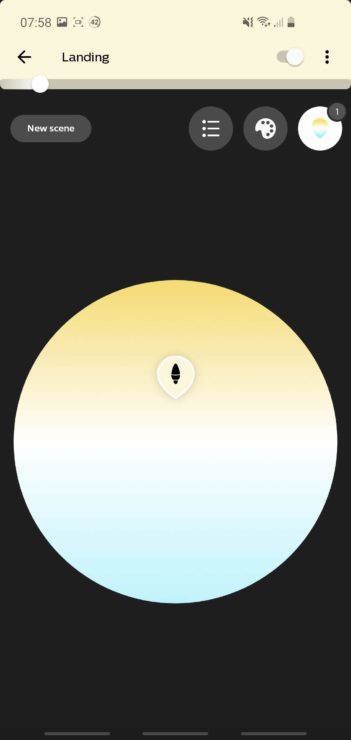
The color temperature wheel/picker within the Hue app.
RGB-CCT makes things more seamless by allowing you to choose a nice ‘bluey white’ or ‘solid’ yellow within the same color wheel, without worrying about managing the color and temperature separately.
RGBIC
The last kind of LED we are going to talk about on our list today is an interesting addition to the RGB LED world.
The RGBIC returns us to the world of consistent and understandable acronyms. The “IC” stands for “Independent Control.”
RGBIC LED lights have an independent control chip built right into the LED strip. This allows them to have a much finer control over their colors as well as special effects. The one big trade off these LED lights come with is that these led strips cannot be cut. Cutting these led strips would break the circuit of the independent control chip and cause the LED light to fail.
RGBIC LED lights are a great option for people who are looking for a more dynamic and energetic LED lighting system.
About Tristan Perry
Tristan Perry is a software developer who is passionate about tech gadgets, DIY and housing. He has therefore loved seeing smart homes hit the mainstream. Tristan also has an academic background (in Math & Computer Science), and so he enjoys digging into the technical ways that smart home devices work.
Tristan owns close to a dozen Amazon Echo devices, way too many Philips Hue bulbs and lightstrips, a boat-load of Ring Cameras and Doorbells. and a bunch of other smart home devices too (from Reolink, Google Nest, GLEDOPTO and others).
If you have any questions, feedback or suggestions about this article, please leave a comment below. Please note that all comments go into a moderation queue (to prevent blog spam). Your comment will be manually reviewed and approved by Tristan in less than a week. Thanks!
4 thoughts on “RGB VS RGB-CCT vs RGBIC vs RGB-W vs… (Why So Many?!)”
Hey Tristan, thanks for all the Hue posts. I’m used to working with 3-5 pin LEDs with microcontrollers, but I’m confused how to work with the 6 pin Philips stuff because there’s no ground pin. What am I missing?
Hey Rob, no worries! Unfortunately I don’t know for sure – you’re right that there’s often a ground pin, but not with Hue’s lightstrip. I don’t know why 100%, but maybe it’s due to the Hue Lightstrip power adapter (also called the Hue lightstrip controller) connecting directly to the light strip – perhaps the power adapter handles the grounding?
Hi Tristan, I appreciate the education on RGB’zs, i am making a large dodecahedron infinity mirror for a friends wedding gift so everyone can get inside what led strip is best for this? Any ideas on DIY led drivers as well perhaps to make the strips go to music and also make it more interactive for the viewers?
Hi Evan, that sounds a fun project! When it comes to LED strips, I either use Philips Hue’s Lightstrip Plus for a simple ‘all in one’ approach. Alternatively, a cheaper (and more DIY-friendly) option would be to buy an LED lightstrip and purchase a compatible GLEDOTPO controller – this is what I done for my kitchen, and I’ve put some of my YouTube videos for this below:
RGB CCT — что это значит?
RGB CCT — это технология освещения, которая позволяет создавать полноцветные эффекты и изменять цветовую температуру света в зависимости от потребностей и настроения. RGB CCT состоит из трех основных цветов: красного (Red), зеленого (Green) и синего (Blue), а также цветовой температуры (Correlated Color Temperature).
RGB CCT становится все более популярным решением в освещении, особенно в дизайне интерьера и различных сценических событиях. С помощью RGB CCT светильников можно создавать разнообразные цветовые сцены, менять цвет и насыщенность света в зависимости от потребностей и настроения. Кроме того, RGB CCT позволяет точно настроить цветовую температуру света, что особенно важно для создания комфортной атмосферы в помещении.
Применение RGB CCT является гибким и многофункциональным. Оно находит свое применение в различных отраслях, таких как домашнее освещение, коммерческие помещения, рестораны, гостиницы, театры и многое другое. Благодаря возможности создавать различные эффекты и настраивать цветовую температуру, RGB CCT позволяет создавать уникальные и запоминающиеся световые и чувственные сцены.
В общем, RGB CCT предлагает бесконечные возможности для воплощения фантазии и креативности. От теплого уютного света до ярких и насыщенных цветов — с помощью RGB CCT можно создать атмосферу, которая подчеркнет вашу индивидуальность и особенность переживания пространства и времени.
RGB CCT: основные понятия и применение
RGB CCT (Red-Green-Blue Correlated Color Temperature) — это система освещения, которая позволяет создавать различные оттенки цвета и регулировать цветовую температуру. В основе системы лежит сочетание трех основных цветов: красного, зеленого и синего, которые смешиваются в различных пропорциях для получения нужного оттенка.
Основные понятия, связанные с RGB CCT:
- RGB CCT-светодиоды: это светодиоды, способные изменять свою цветовую температуру и создавать широкую палитру оттенков цветов. Они могут быть использованы в различных областях, таких как домашнее освещение, архитектурное освещение, развлекательные мероприятия и т.д.
- Цветовая температура: это характеристика света, определяющая его оттенок. Выражается в градусах по шкале Кельвина (K). Чем выше значение, тем «холоднее» свет, и наоборот, чем ниже значение, тем «теплее» свет.
- Смешение цветов: RGB CCT-системы позволяют смешивать цвета в различных пропорциях, чтобы создавать нужный оттенок. Например, для получения оранжевого цвета можно смешать красный и зеленый цвета.
- Управление и регулировка: RGB CCT-системы обычно оснащены специальными контроллерами или пультами дистанционного управления, которые позволяют изменять цветовую температуру и яркость света в зависимости от потребностей.
Применение RGB CCT-систем:
- Домашнее освещение: RGB CCT-светодиоды могут быть использованы в качестве основного и декоративного освещения в домах. Они позволяют создавать различные атмосферы и изменять цветовую температуру в соответствии с настроением и функциональными потребностями.
- Архитектурное освещение: RGB CCT-светодиоды могут быть установлены на фасадах зданий или других архитектурных элементах, чтобы подчеркнуть их контуры и создать эффектное освещение.
- Развлекательные мероприятия: RGB CCT-системы широко используются на концертах, в клубах и других местах развлечений, где нужно создать яркое и многоцветное освещение.
- Театральное освещение: RGB CCT-системы позволяют создавать различные эффекты освещения на театральных сценах, сменять настроение и подчеркивать актерские выступления.
RGB CCT-системы предлагают широкие возможности для создания уникальных и креативных световых решений в различных сферах. Они позволяют не только освещать пространство, но и создавать эффекты, привлекающие внимание и создающие нужное настроение.
RGB и CCT: разница и сходства этих двух технологий
RGB и CCT — это две разные технологии освещения, которые имеют свои особенности и применение. Разберемся в их различиях и сходствах.
RGB (Red, Green, Blue)
- Система RGB основана на комбинации трех основных цветов: красного (Red), зеленого (Green) и синего (Blue).
- Путем изменения яркости каждого из цветов, RGB позволяет получить множество оттенков и создавать разнообразное освещение.
- RGB чаще всего используется в различных развлекательных сферах, таких как театры, дискотеки, шоу-программы, где нужно создавать динамичное и яркое освещение.
- RGB также нашел широкое применение в домашнем освещении, где можно создать разные настроения, изменяя цвет освещения.
CCT (Correlated Color Temperature)
- CCT основана на спектре цветов, которые имитируют естественное освещение, такое как солнечный свет или свет от горящего тела.
- Световая температура измеряется в Кельвинах (K) и обозначает цветовую характеристику света — теплый или холодный.
- Система CCT позволяет настроить цветовую температуру света в диапазоне от теплого (например, 2700K) до холодного (например, 6500K).
- CCT широко используется в офисных помещениях, магазинах, а также в освещении домов и квартир, где важно создать комфортную атмосферу.
Сходства RGB и CCT
- Оба типа освещения позволяют создавать настроение и менять цветовую гамму.
- RGB и CCT основаны на электрической системе освещения, где используются светодиоды.
- И RGB, и CCT являются энергоэффективными и долговечными типами освещения.
- И RGB, и CCT могут управляться с помощью специализированных пультов, смартфонов, компьютеров.
Таким образом, RGB и CCT предлагают разные подходы к освещению, однако они являются эффективными и позволяют создавать различные настроения и атмосферу в помещении.
Как использовать RGB CCT в освещении дома
RGB CCT — это технология освещения, которая позволяет создавать различные цветовые сценарии и настраивать теплоту света. С помощью RGB CCT ламп и светильников можно создать комфортное освещение, которое подойдет для любых задач и настроений.
Вот несколько способов использования RGB CCT в освещении дома:
- Настройка цветовой атмосферы — с помощью RGB CCT светильников можно создавать различные цветовые сценарии в комнате. Например, для романтического вечера можно выбрать теплый красный свет, для вечеринки — яркий многокрасочный свет, а для чтения — яркий белый свет.
- Изменение теплоты света — RGB CCT светильники позволяют настраивать теплоту света в диапазоне от теплого желтого до холодного белого. Таким образом, можно создать оптимальное освещение для различных задач. Например, для работы за компьютером лучше выбрать свет более холодного оттенка, а для релаксации — свет более теплого оттенка.
- Создание автоматических сценариев — некоторые RGB CCT светильники имеют функцию создания автоматических сценариев освещения. Например, можно настроить светильники таким образом, чтобы они включались автоматически утром с мягким теплым светом, постепенно становясь более ярким и холодным к вечеру.
Различные производители предлагают разные модели RGB CCT светильников и ламп, так что выбор варианта освещения с поддержкой этой технологии зависит от ваших потребностей и предпочтений. Удобство использования, длительность и надежность работы, а также возможность программного управления RGB CCT светильниками — важные параметры, которые стоит учитывать при выборе.
Преимущества и недостатки использования RGB CCT
Преимущества:
- Гибкость цветовой палитры: при использовании RGB CCT осветительных систем можно создавать широкий спектр цветовых решений, от теплого до холодного света.
- Возможность регулировки яркости: RGB CCT системы позволяют регулировать яркость света, что позволяет создавать различные атмосферы в помещении.
- Декоративные возможности: благодаря гибкости цветовой палитры, RGB CCT осветительные системы могут использоваться для создания декоративного светового оформления помещений, выставок, концертных площадок и других событий.
- Управление через смартфон: многие осветительные системы, основанные на технологии RGB CCT, могут быть управляемыми через мобильные приложения, что обеспечивает удобство и простоту в настройке и изменении параметров света.
Недостатки:
- Высокая стоимость: RGB CCT осветительные системы могут быть дороже других типов освещения, что может быть фактором, ограничивающим их использование в некоторых случаях.
- Сложность установки и программирования: для работы с RGB CCT осветительными системами требуется знание и навыки в области программирования и установки, что может быть препятствием для некоторых пользователей.
- Потребляемая мощность: RGB CCT системы могут потреблять больше электроэнергии в сравнении с другими типами светильников, что может привести к увеличенным расходам на электричество.
Несмотря на некоторые недостатки, RGB CCT осветительные системы обладают широкими возможностями в области освещения и дизайна интерьера, что делает их популярными в современных условиях. Они позволяют создавать уникальные сценарии освещения и создавать комфортные условия в различных помещениях.
Выбор между RGB и CCT основанном на ваших потребностях
RGB и CCT — это два различных типа светодиодных ламп, которые позволяют вам создавать разнообразные световые эффекты и настраивать цветовую температуру света. Выбор между этими типами основан на ваших потребностях и предпочтениях.
RGB (Red, Green, Blue) светодиодные лампы предоставляют широкий спектр цветовых комбинаций, которые могут быть настроены по вашему желанию. Вы можете создавать разнообразные цветовые эффекты, такие как медленно меняющиеся цвета, плавные переходы между разными оттенками и мигания в разных режимах.
С другой стороны, CCT (Correlated Color Temperature) светодиодные лампы позволяют настраивать цветовую температуру света в диапазоне от теплого белого света (2700K) до холодного белого света (6500K). Вы можете выбрать настройку, которая будет соответствовать вашим потребностям и настроению. Теплый белый свет обычно используется для создания уютной и спокойной атмосферы, в то время как холодный белый свет может использоваться для яркого освещения и увеличения энергии в помещении.
Если вам нужна гибкость и возможность создания разнообразных световых эффектов, то RGB светодиодные лампы будут подходящим выбором для вас. Они идеально подходят для декорации интерьера, освещения вечеринок или для добавления атмосферы в особые моменты.
Если вы ищете более функциональное освещение с возможностью настройки цветовой температуры в зависимости от вашего настроения или задачи, то CCT светодиодные лампы будут хорошим выбором. Они подходят для освещения рабочих пространств, спален, кухонь и других помещений, где важна определенная атмосфера и функциональность освещения.
В общем, выбор между RGB и CCT основан на вашем личном вкусе, предпочтениях и задачах, которые вы хотите решить с помощью светодиодных ламп. Учитывайте эти факторы при выборе светового решения для вашего дома или офиса.