FHD vs. IPS: What Is the Difference?
The screen technology war is raging on multiple fronts: TVs, smartphones, tablets, or monitors are all products on which manufacturers proudly affix an “IPS” or “Full HD.” And indeed, these are some of the main talking points in the hardware market. So, what is the difference between an IPS and FHD?
FHD, which indicates full high definition, is an acronym used to refer to the 1080p screen resolution in devices. Meanwhile, IPS is an acronym used for describing a type of LED monitor screen technology known as in-plane switching monitors; that is, the liquid crystals’ shifting patterns characterize these monitors.
In this article, we’ll tell you more about an IPS and Full-HD and how to consider them when purchasing your next monitor or laptop.
What is FHD?
FHD is an acronym that means Full High Definition. It’s used for describing screens with 1080 pixels format to resolutions.
When we talk about mobile device screen resolutions, we often refer to them as HD, Full HD (or FHD) screens.
The number of horizontal and vertical pixels that a screen has, which, as you have already seen, is what these terms refer to. Therefore, a resolution should indicate how many pixels a screen has. That is, what pixel density does a screen have. In this, the screen size has a lot to say since a 5-inch Full HD panel is not the same as a 13-inch one.
For example, you can find mobile devices with screens with Full HD definition with 1,920 x 1,280 pixels, in very different sizes – from 5-inch to 13-inch screens. How can they all have the same number of pixels if their screen size is more than twice as big?
The value of resolution, commonly associated with the screen’s pixel density, comes to play. This expresses the number of pixels that an inch of screen has. This value is expressed by the acronym PPI (pixels per inch).
What is IPS?
IPS is an acronym for in-plane switching used in LCD technology. Many smartphone displays are composed of an LCD surface. LCD is a liquid crystal screen. The composition of the crystals on display ensures that the image is clear and distinct for the viewer, regardless of the type of light falling on the display.
The liquid crystals and the display are activated when a voltage is generated. If the user presses a button, the voltage is generated, and the display lights up. There are also pixels inside the display. These are points of light and are filled with color.
The more pixels the display contains, the more detailed the image display becomes. Modern smartphone manufacturers build IPS panels into their cell phones to create greater viewing angle stability.
The advantage of IPS is the increased viewing angle stability. If the smartphone is lying on the table and the glowing display is viewed from different angles, you quickly notice the picture fades with increasing angles. The colors are no longer as clear and sharp as when the display is viewed vertically from above.
The IPS technology improves precisely this process, leading to a clear image representation, even when the display is viewed from the side.
Viewing angle stability with an IPS is possible with an angle of up to 178 degrees. The liquid crystals of an LCD with built-in IPS are arranged in parallel. On the other hand, previous models without IPS have crystals that are twisted together. This constellation of liquid crystals replaces the spiral shape of the molecules and achieves increased viewing angle stability.
This is a significant improvement for smartphone displays, but users have a slight downside. This arrangement of the liquid crystals allows light incident on the display to a lesser extent. Therefore, it is necessary for the display’s background lighting to be brighter always to deliver a clear and sharp image.
However, increased backlighting is labor-intensive and consumes a more significant portion of battery power always to be able to deliver a clear and sharp image than traditional LCDs.
IPS vs. VA panel: How to make the right decision
With LCDs, you can choose between an IPS or a Vertical Alignment Panel (VA) panel. We will show you the advantages and disadvantages of each type.
The display of an LCD is mainly created and controlled by liquid crystals. Here is the fundamental difference:
- On VA panels, the crystals are arranged vertically; on the other hand, on the IPS panel, they are arranged horizontally.
- When a VA panel is put into operation, the crystals tilt from the vertical alignment to a horizontal alignment. This ensures excellent contrast values for the VA panel. Unfortunately, that’s one of the few advantages of the VA panel.
IPS vs. VA: Which panel is better?
VA panels are a bit behind IPS in color accuracy, but they are more suitable for gaming scenarios. However, with the IPS panel, the crystals are arranged evenly on top of each other and only have to rotate and not move spatially to change the display. This ensures significantly shorter response times with the IPS panel, essential for gaming.
Due to the homogeneous arrangement of the crystals, the viewing angle is also significantly larger and more stable. Even if the contrast is higher on the VA panel, the IPS panel provides greater color values. The IPS panel also performs better in terms of power consumption.
The TN is nonetheless still a gamer’s friend, thanks to its excellent responsiveness (5 ms and less). If a VA panel is touched, it reacts much more strongly to the disturbance and flickers, usually not desired. If you run your finger over the VA panel, you can draw a line for a short time. In the best case, this is not possible with the IPS panel.
If the panels are exposed to high temperatures, the IPS panel also proves its worth here. VA panels form black spots, so-called HotSpots, when exposed to radiation from 57 degrees Celsius. These disappear after cooling down, but this can permanently damage the panel.
Conclusion
Still, there is no basis for comparison between FHD and IPS. Indeed, you can find a Full HD IPS screen on the market. FHD is a screen format, while IPS is an LED screen technology.
The only difference in screen definitions such as FHD is the screens are in vertical and horizontal pixels. At the same time, in IPS panel technology, the displays are composed of liquid crystals arranged in parallel.
Full HD vs. Full HD IPS: What is the Difference?

When buying a new monitor or laptop, you don’t just walk up to the store and point at the one you want to buy. Even in a hurry, it is normal to ask about screens and the specs.
If someone happened to ask you whether you prefer full HD or full HD IPS, these are all screen display terms used in most screens for laptops, monitors, and TVs.
While screen terms may sound similar, for instance, FHD and HD, or OLED and QLED, they are quite different.
It is not unusual to get confused about these terms, which is why this article has details on full HD vs. Full HD IPS displays. Read on to get the basics and the details.
What Is Full HD Resolution?
To start with, the number of pixels an image has is measured in width and height. Full HD is the acronym for full high definition. When a monitor, laptop, or TV has full HD resolution its images feature 1920X1080p resolution.
Full HD is much improved compared to HD displays, and the difference is notable in the clarity and sharpness delivered in the images of each resolution. While Full HD is 1920X1080p, HD is 1280X720p, which makes full HD superior.
Full HD display is a recommended screen resolution for laptops for video editing, gaming, business laptops, and laptops for studying. It is also a great display for monitors used for the same purpose.
Full HD Alternatives
While Full HD is still an amazing display resolution, it is not to say that there are no alternatives to this display. Furthermore, there are higher display resolutions that are coming up and are taking over the display world. This includes:
HD is the predecessor screen resolution of Full HD. It features a 1280X720p screen resolution. Some laptops and monitors still use HD resolution, but it is most commonly used in facetime cameras.
4K Resolution
Currently, 4K resolution is the buzz for display, especially in the TV world. It is also preferred for gaming monitors over Full HD. 4K resolution features 3840X2160p, which makes the images clearer and sharper than those delivered in full HD.
5K Resolution
This is a futuristic display resolution and no laptop has this kind of resolution. It features 5120X2880p. This resolution is perfect for creative professionals who need image clarity that is out of this world.
When to Get a Full HD Monitor
If you have an HD Monitor and are considering an upgrade, you should have a Full HD monitor among your options. A Full HD monitor has 1920x1080p which gives it 2 million pixels. Full HD monitors are still excellent at displaying great pictures and this is when you should get one:
When Upgrading From an HD Monitor
If you currently have an HD monitor that you want to upgrade, a full HD monitor is a fine step up. It is not a must for you to buy the newest resolutions such as 4k or 5k unless you want a big upgrade.
Full HD monitors are much better at display than HD monitors which makes them a perfect upgrade for an HD monitor.
For Gaming
Full HD delivers an amazing display for game enthusiasts. Full HD doesn’t disappoint in gaming, and it comes cheaper than UHD.
When Editing Videos
With video becoming popular over the years, video editing has become a popular hustle for millions of self-trained video editors, YouTubers, and content creators. Video editing requires good image clarity to get the best results.
A Full HD monitor is a good option for laptops for video editing, especially when used with an amazing video editing tool, for instance, adobe premiere pro or after effects.
For Internet Surfing
Even browsing requires high pixels to give you clarity, especially on the images. If you are looking for a good laptop for surfing the internet, you should try one with a Full HD display.
What is IPS Display?
IPS is an abbreviation for in-place switching. It is a color technology used in LCD screens. Earlier color technology had flaws when it comes to viewing. The IPS technology developed in the 90s came in to solve the viewing issues displayed by other LCD color technology.
How Does IPS Technology work?
IPS alters how liquid crystals in LCD screens behave to deliver high-quality images and better viewing angles.
It gets the crystals to rotate parallel when voltage is applied, which allows light to pass through easily. This reduces the interference in light produced by the display, delivering clearer images.
IPS Alternatives
There are alternatives used in place of IPS when it comes to LCD screens. They include:
This is a color technology used in LCD screens. It goes at an affordable price, delivers great image contrast, and is good for daily use. VA screens however are prone to slow performance.
TN color technology is the cheapest of all LCD screens, it is also fast in performance and is great for gaming. Unfortunately, TN delivers poor image contrast and bad color, making it fall behind IPS in terms of performance.
Led is also a color technology that uses a backlight to display images, instead of the panels used by IPS and LCD screens. Some of the best LED color technology include OLED and QLED.
Advantages of IPS over its alternatives
First, IPS is the best color technology for LCD screens. It is great for all screen purposes including gaming, editing, and general use. The technology is also great on TV screens. IPS is also the newer technology and has the best viewing angles.
When To Buy an IPS Monitor
If you are thinking of changing your monitor or simply getting a new one, this is when you need an IPS monitor:
If Your works station has direct sunlight
If your workstation or gaming station has direct sunlight, you need an IPS monitor to get the best images. An IPS monitor can give high-quality images even when your monitor is exposed to sunlight.
When you need wider viewing angles
With an IPS monitor, color distortion is eliminated. It delivers high-quality images at any viewing angle.
For Video Editing, and Other Purposes
The display quality of an IPS monitor is perfect for graphics design, video editing, and all other tasks a monitor does.
Although an IPS display comes with many advantages, it has some flaws like the high cost due to its advanced color technology. IPS screens also consume more power than other LCD screens.
Another deal breaker is that IPS is also not that great at gaming as it delivers slow responsiveness.
FHD vs IPS: Key Differences
Full HD and IPS are independent terms and do not directly conflict with one another. While full HD is display resolution and screen ratio, IPS is color technology.
It is possible to have a Full HD IPS screen, but it is not the best mix in some instances.
When it comes to color technology, IPS is great in some aspects such as viewing angles and contrast but falls behind in screen responsiveness. This means that it cannot be rated top or bottom of VA and TN in some instances. On the other hand, Full HD is better than HD but worse than 3k, 4k, and recently 5k.
Another notable distinction between full HD and IPS is when the two were invented. IPS is a millennial as it came in 1996 while Full HD falls in gen Z as it was invented in 2006.
Also, note that the alternative and direct competition for full HD is HD, 4k, and 5k while the alternative and direct competition for IPS is VA, TN, and LED.
While full HD is perfectly fine for gaming monitors, IPS is not recommended for gaming as it is slow to respond.
Is Full HD Similar to IPS?
The main similarity between full HD and IPS is that both are found on the screen. Full HD and IPS are like an apple and mango. Both are fruits but are not similar in shape, texture, or taste. Full HD represents display resolution while IPS represents LCD color technology.
Is IPS the Best LCD?
IPS outshines other LCD technology in viewing angles. However, when it comes to screen responsiveness, it falls behind TN. IPS is the best LCD screen when the purpose of the screen matches its strengths.
Is IPS Good For the Eyes?
IPS delivers great contrast and high-quality images. The eyes do not strain to get image clarity, which makes it better for the eyes than most LED screens. IPS also minimizes eye strain when using your monitor in a naturally lit room.
Conclusion
After all the screen inventions, one needs to be aware of exactly what display technology has to offer. Full HD is still at the top of its game despite the competition from its alternative 5k and 4k. IPS on the other hand outshines VA and TN in some display aspects such as image contrast and viewing angles.
It is easy to want to compare IPS and full HD, but actually, the two can exist on one screen. They are different terms and use different technology to deliver the best in displaying images.
Tom is a network engineer and a tech consultant. He spends his time solving networking problems while keeping tabs with the latest in the technology field.
Recent Posts
Sustainable computing emerges from the intersection of environmental sustainability and the rapid evolution of computing technologies. As laptops are one of the most widely used electronic devices.
IntroductionIn the fast-paced world of digital marketing, having the right tools at your disposal can make all the difference in delivering exceptional results for your clients. One of the most.
About Us
Heyya, I’m Tom Russells. I am Cisco certified as CCNP Security, and I have worked as a network engineer at a multinational ISP. I have been working as a network engineer consultant for the past 7 years, and I use this website to share my networking knowledge with the world.
FHD vs. IPS Monitors: What’s the Difference?
FHD and IPS are terms commonly used to describe televisions and computer monitors. Seeing as they’re just 3-letter acronyms, it can be very difficult to tell if they’re just buzzwords or if they are actually meaningful. And, besides that, how do you know which will be better for you?
Well, you can actually have both. Full high definition (FHD) is a measurement of resolution. FHD displays use a resolution of 1920 x 1080 pixels (1080p).
On the other hand, in-plane switching (IPS) is a type of LCD panel technology used in screens. While FHD doesn’t really dictate anything about the monitor except for resolution, IPS has a variety of unique features when compared to other screen technologies.
Both FHD and IPS will have an impact on your viewing experience, whether you’re using them for watching shows, gaming, or work. Some of the features you’ll be looking for from a monitor will be different depending on your usage.
Regardless, there are consistently good-to-have features you should keep an eye on. The main one is resolution (which FHD covers). Higher resolutions are easier on the eyes, look smoother, and seem more cohesive. The size of the monitor is also pretty important, as are the refresh rate and response rate.
Although one display can be FHD and IPS at the same time, you might still need to pick between a monitor with FHD/IPS and a monitor with only FHD.
So, how will you make that decision? Let’s break it all down below so you know what to do.
FHD vs. IPS Monitors: A Side-by-Side Comparison
| Full High Definition (FHD) | In-Plane Switching (IPS) | |
|---|---|---|
| What is it? | Screen format/pixel resolution | Type of LCD screen panel |
| Introduced in | 2006 | 1996 |
| Unique features | 1920 x 1080 pixels (1080p) resolution | Consistent color, better viewing angles, no tailing |
| Typical price of a monitor | $85+ | $100 – $1500 |
| Alternative technology | HD, FHD, QHD, UHD | TN, VA, LED panels |
FHD vs. IPS Monitors: How Good Are They?
Since FHD and IPS refer to technologies that are really quite different, comparing them directly can be like comparing apples to oranges. It’s nearly impossible to get a sense of how good they are without taking a closer look at the features you’ll get with each technology.
Full High Definition (FHD)
You’ve probably heard of HD in the context of visuals, which sounds good, but is only half the resolution of full HD. High definition, as an older screen format, uses 1280 x 720 pixels. The difference is very noticeable no matter the context.
To read those resolution specs, you simply multiply the two numbers together. FHD’s 1920 x 1080 pixels come out to 2 million pixels–-or bits–-across the entire screen. The resolution numbers also describe the height and length of a display.
An FHD monitor will have 1920 pixels across its horizontal length and 1080 pixels vertically. Note that these pixel measurements don’t directly correlate to an inch measurement, so how they look will depend on the display’s size.
Pixels per inch (PPI) is used to translate between pixels and inches. Using PPI, you can get a better idea of what the pixel density will be; higher densities will look better to a point, and after that icons will start to look strangely small. 90-110 PPI is considered the golden standard for monitors.
Putting that into practice, an FHD monitor with a pixel density of 60 PPI (a physically larger screen) is going to look worse than an FHD monitor with a pixel density of 100 PPI (a physically smaller screen). Thus, it’s not just the FHD that matters, but the PPI that the display allows for.
FHD Alternatives
The direct alternatives to FHD are other screen formats or resolutions. These include regular HD, QHD, and UHD. We already went over HD, which is the smallest resolution that’s regularly available.
Quad high definition (QHD) uses 2560 x 1440 pixels, and ultra-high definition (UHD) is standardized at 3840 x 2160 pixels. Confusingly, quad high definition is named that way because it’s 4 times the resolution of HD. Ultra-high definition is the screen format that’s actually called ‘4k,’ rounded up from 3840p.
Full HD feels overshadowed compared to these higher resolution formats, but it’s really a good place to start for just about any use case. After all, our brains can only appreciate so many pixels before it becomes hard to tell the difference!
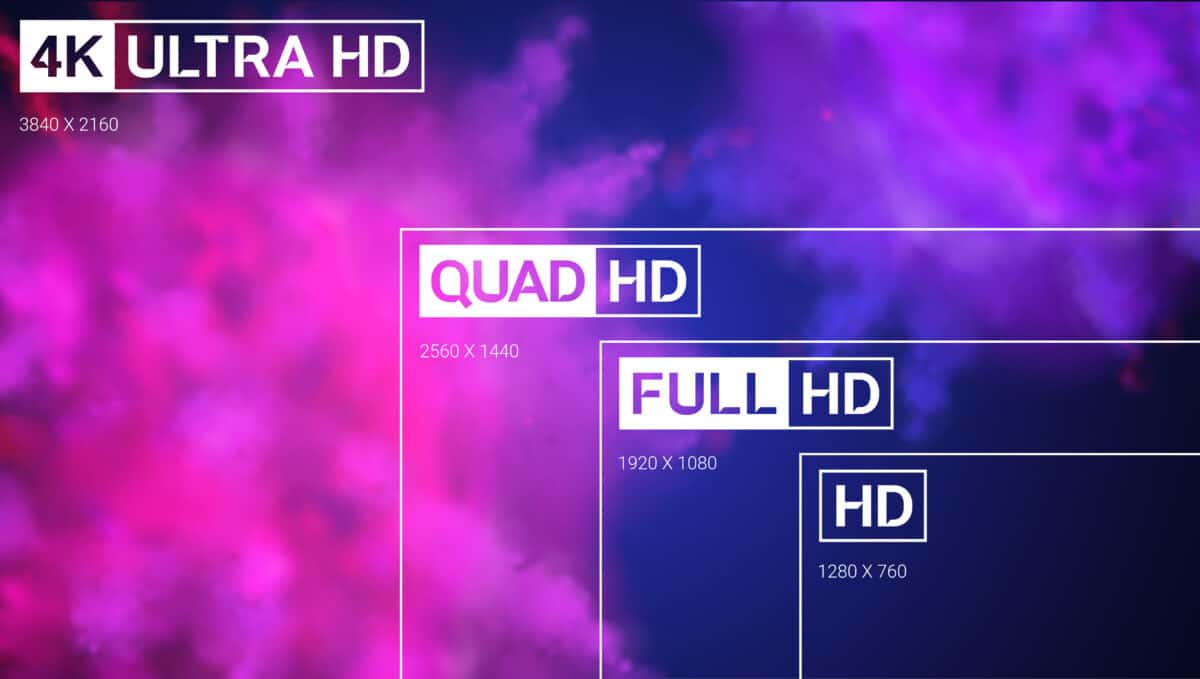
FHD and IPS technologies can be found together on certain screens, but FHD refers to the pixel resolution of the screen.
In-Plane Switching (IPS)
IPS screens are a type of LCD panel, with LCD standing for liquid crystal display. As the category implies, IPS screens and all other LCD panels are made of liquid crystals arranged together.
An IPS display has liquid crystals lined up horizontally in parallel. This design has several benefits, although it’s not without its drawbacks, either. IPS displays are more expensive than the more commonly used TN panel.
As you’ll see, the pros of getting an IPS screen can be somewhat niche compared to the meaningful cost difference. Depending on your situation, IPS might not actually be all that good of an option.
Where IPS excels is in color display and viewing angles. Usually, you can’t look at a screen from an angle without starting to see strange, distorted colors. This inversion happens much less often (and only at sharper angles) with an IPS display.
If you have a touch screen, IPS displays will feel significantly better than a typical TN panel. Have you ever tried to wipe dust or hair off your non-IPS screen? You might have noticed a ‘trail’ of distortion following your finger. IPS displays don’t have that issue, making them ideal for touch screen technology.
Overall, IPS works extremely well in certain cases. Outside of that, IPS doesn’t necessarily make for a better display than other LCD panels.
IPS Alternatives
Any display that mentions LCD but doesn’t specify which kind is probably using TN panels. These screens are the most common (particularly in lower-end tech) and the cheapest type of LCD panel that can still get the job done.
TN panels are strictly worse at what IPS is good at: viewing angles and color reproduction. You need to be looking at the screen directly, head-on, for it to be reasonably accurate and functional.
They actually have a better response time than IPS monitors, despite TN panels being cheaper. This means that you won’t have to wait as long between sending the input to your computer and seeing the change on your monitor. Either way, most IPS and TN displays are going to have response times plenty fast enough for casual usage.
The third kind of LCD panel is a VA display. It’s the most expensive but still has response times just behind TN panels. Visually, though, VA displays can do any scene justice. VA has an amazing contrast ratio and decent color reproduction.
FHD vs. IPS Monitors: What Should I Get?
You can get an FHD monitor, an IPS monitor, or any other blend of screen format and panel technology that you’d like. The combination of FHD and IPS is solid in some situations but isn’t ideal everywhere.
When to Get an IPS Monitor
If you’re using extra work monitors that are set up at an angle, it can be worth it to invest in IPS displays. The screen distortion you experience with other LCD monitors gets old fast–-it’s definitely better to take the upfront cost of an IPS monitor than to deal with a worse monitor for years.
Graphic design and other visual professions can also benefit from an IPS monitor because of the improved color reproduction. A TN display will let you down with its mediocre graphics. Although VA displays have great color, they’re also more expensive. IPS monitors are the perfect middle ground in this situation.
In gaming, IPS might not be the best. IPS displays used to be known for having significantly lower response and refresh rates, both of which have had meaningful improvements in the past years. Still, they don’t quite match the response speeds of a TN panel.
Fast-paced games that require constant, real-time action (especially tactical shooters) might be better with a TN display. Games with beautiful visuals are the most enjoyable with a IPS or VA display, though. It all depends on what kind of games you want to play and what you want your experience to be like.
When to Get an FHD Monitor
As for FHD, 1080p resolution is fine for most things so long as it’s matched with a good pixel density/PPI. You’ll only need to upgrade if you want a very large monitor or you want the absolute best of the best graphics.
Ultimately, FHD and IPS are both good things to have in a monitor. But they aren’t as related as you might think, and there are plenty of alternatives that could be better (or worse!) depending on your needs.
Next Up…
Take a look some of our space content:
The image featured at the top of this post is ©Andrey_Popov/Shutterstock.com.
FHD vs. IPS Monitors: What’s the Difference? FAQs (Frequently Asked Questions)
Is IPS display better than FHD?
An IPS display is in a different category from FHD, as FHD refers to 1080p resolution and IPS refers to a type of LCD screen technology. Neither of them can be better than the other because they’re not the same type of feature. In fact, you can have a display that’s both FHD and IPS at the same time.
Is IPS and FHD same?
IPS and FHD are two different concepts. FHD is a screen format, and it dictates the resolution of the display. IPS is a kind of LCD panel which happens to have high color reproduction and flexible viewing angles. You can have a monitor that uses an IPS screen and FHD resolution.
Are IPS monitors better?
IPS monitors are better for visuals than TN screens and most LED screens, and are closely matched to VN monitors. However, they do have a lower response and refresh rate compared to TN panels.
Is FHD or IPS better for gaming?
You can have a monitor that’s both FHD and IPS, so there’s no need to choose between the two. FHD is 1080p resolution, which works fine unless you have a large monitor or want pristine graphics. IPS monitors are some of the greatest for visuals, with VA monitors as a close second.
IPS monitors don’t have as good of response times as TN monitors, though, so you’ll want to consider whether you prefer high response times or beautiful graphics.
Miriel Parmar, Author for History-Computer
Miriel Parmar is a tech writer from the ‘Silicon Desert’ of Phoenix, Arizona. Although their main focus is on blockchain, gaming, and fintech, Miriel has a fascination with the latest and greatest technologies. If there’s something new (or even better, disruptive), then Miriel is never far behind. Aside from writing, Miriel can be found experimenting with new recipes and playing with their beagle.
Join the discussion Cancel
This site uses Akismet to reduce spam. Learn how your comment data is processed.
Popular Articles

Thumb Drive vs. Flash Drive: 6 Key Differences and Which One is Best for You
Что лучше: IPS или Full HD
В современном мире выбор монитора или ноутбука становится все более сложным и многообразным. Один из наиболее важных аспектов, на который следует обратить внимание при выборе, это тип экрана. Два наиболее популярных типа экрана – IPS (In-Plane Switching) и Full HD (Full High Definition) – имеют свои достоинства и недостатки, поэтому понимание различий между ними поможет принять правильное решение.
IPS – это технология, разработанная для улучшения качества изображения и углов обзора. Эти экраны обеспечивают более точное и яркое отображение цветов, а также более широкие углы обзора, что играет важную роль при работе с графическими изображениями, просмотре фильмов, играх и т. д. В отличие от ранее популярных TN-матриц, IPS-экраны обеспечивают постоянную яркость и насыщенность цветов при любом угле обзора.
Full HD – это стандарт разрешения экрана, который составляет 1920х1080 пикселей. Это означает, что такой экран имеет более качественное изображение с более высокой четкостью. Однако, стоит помнить, что разрешение экрана не является единственным фактором, который влияет на качество изображения. Кроме того, производители могут использовать различные технологии и материалы, что влияет на финальный результат.
В общем, выбор между IPS и Full HD зависит от ваших потребностей и предпочтений. Если вам важно качественное и яркое отображение цветов с широкими углами обзора, то лучше выбрать экран с технологией IPS. Если же вы больше уделяете внимание разрешению и четкости изображения, то стоит обратить внимание на экраны с разрешением Full HD.
Важно помнить, что выбор экрана – это индивидуальный процесс. Перед покупкой стоит рассмотреть свои потребности, изучить характеристики и сравнить разные модели. Только таким образом можно сделать правильный выбор и наслаждаться качественным изображением на своем мониторе или ноутбуке в течение многих лет.
IPS или Full HD: что выбрать для лучшего экрана?
IPS (In-Plane Switching)
- IPS — это тип технологии экрана, которая обеспечивает широкие углы обзора и точное цветопередачу.
- IPS-экраны отличаются от обычных LCD-экранов тем, что сохраняют яркость и контрастность изображения даже при просмотре под углом.
- IPS-экраны обеспечивают плавное и четкое отображение быстродвижущихся объектов, что особенно важно при играх или просмотре видео.
- Однако IPS-экраны могут быть дороже по сравнению с другими типами экранов, а также иметь более высокое энергопотребление.
Full HD (1920×1080)
- Full HD — это разрешение экрана, которое составляет 1920 пикселей в ширину и 1080 пикселей в высоту.
- Full HD-экраны обеспечивают высокую четкость и детализацию изображения, что особенно полезно при просмотре фильмов или игр.
- Full HD-экраны являются более доступными по цене по сравнению с экранами высокого разрешения, такими как 4K.
- Однако Full HD-экраны могут иметь ограниченные углы обзора и менее точную цветопередачу по сравнению с IPS-экранами.
Итак, какой же выбрать для лучшего экрана — IPS или Full HD? Все зависит от ваших потребностей и предпочтений. Если вы цените широкие углы обзора, точность цветопередачи и плавное отображение быстродвижущихся объектов, то IPS-экран будет лучшим выбором для вас. Если же вы ищете более доступный по цене вариант с высоким разрешением, то Full HD-экран может быть идеальным решением.
Независимо от вашего выбора, важно учесть, что и IPS, и Full HD предлагают отличное качество изображения и обеспечивают приятный опыт просмотра на экране. Выбирайте в зависимости от своих нужд и наслаждайтесь отображением на вашем новом экране!
Определение IPS и Full HD
Full HD — это разрешение экрана, которое обозначает наличие 1080 горизонтальных строк и 1920 вертикальных строк пикселей. Full HD предлагает более высокую плотность пикселей и более детализированное изображение по сравнению с разрешением HD (720p). Это значит, что вы получаете более четкое и реалистичное отображение изображений и видео на экране с разрешением Full HD.
IPS и Full HD являются независимыми технологиями экрана, и их можно использовать как отдельно, так и вместе. Экраны с разрешением Full HD могут быть оснащены IPS-панелью, что позволяет получить наиболее точное и качественное изображение с насыщенными цветами и широкими углами обзора.
Сравнение IPS и Full HD
1. Технология: IPS (In-Plane Switching) — это тип технологии дисплея, которая обеспечивает широкие углы обзора и хорошую цветопередачу. Full HD (1920×1080 пикселей) — это разрешение экрана, которое описывает количество пикселей в горизонтальном и вертикальном направлениях.
2. Углы обзора: IPS-экраны обеспечивают лучшую видимость из разных углов, что делает их идеальным выбором для просмотра контента из любого положения. С другой стороны, Full HD-экраны могут иметь ограниченные углы обзора, что может привести к плохому восприятию цветов и контрастности при просмотре с боковых позиций.
3. Разрешение: Full HD — это стандартное разрешение, которое обычно обеспечивает четкость и детализацию изображения. Однако, IPS-экраны могут иметь различные разрешения, включая Full HD, Quad HD и 4K. Это позволяет пользователям выбирать между разными уровнями детализации.
4. Цветопередача: IPS-экраны обычно обладают лучшей цветопередачей и более точными цветами, что делает их предпочтительным выбором для профессиональных задач, таких как редактирование фотографий или видеомонтаж. Full HD-экраны могут иметь менее точное отображение цветов и могут не подходить для точной работы с цветами.
В итоге, выбор между IPS и Full HD зависит от ваших потребностей и предпочтений. Если вам важны широкие углы обзора и точная цветопередача, то IPS-экран может быть лучшим вариантом. Если вам необходимо стандартное разрешение с достаточной четкостью, Full HD-экран может быть более подходящим выбором.
Как выбрать лучший экран: IPS или Full HD?
При выборе экрана для компьютера или ноутбука многие сталкиваются с дилеммой: IPS или Full HD? Оба эти термина относятся к характеристикам экрана, но имеют различные особенности и преимущества. Чтобы сделать правильный выбор, следует учитывать свои нужды и предпочтения.
IPS (In-Plane Switching) — это технология, которая позволяет достичь более широких углов обзора и более точную передачу цветов на экране. Экран с IPS-панелью обеспечивает лучшую цветопередачу и точность отображения, что делает его идеальным для работы с графикой, фото- и видеомонтажем. Кроме того, IPS-экраны обладают высокой четкостью изображения и хорошей контрастностью. Однако, у таких экранов часто наблюдается более высокое время отклика и более высокая цена.
Full HD (1920×1080 пикселей) — это разрешение экрана, которое предлагает высокую детализацию и четкость изображения. Экран с разрешением Full HD подходит для просмотра фильмов, игр и обычных повседневных задач. Однако, у таких экранов может быть более узкий угол обзора и менее точная передача цветов по сравнению с IPS-панелями.
- Если вы занимаетесь графикой или фото- и видеомонтажем, рекомендуется выбрать экран с IPS-панелью. Он обеспечит точное отображение цветов и высокую цветопередачу.
- Если вы часто смотрите фильмы и играете в игры, то экран с разрешением Full HD будет идеальным выбором. Он предложит высокую детализацию и четкость изображения.
- Если вы ищете компромисс, то существуют экраны, которые сочетают в себе и IPS-панель, и разрешение Full HD. Они обеспечивают хорошую цветопередачу и высокую детализацию изображения, но могут быть дороже.
В итоге, выбор между IPS и Full HD зависит от ваших конкретных потребностей и бюджета. Оба варианта имеют свои преимущества, и зачастую лучше выбирать сбалансированный экран, предлагающий оптимальное соотношение между цветопередачей и детализацией изображения.
Вопрос-ответ
Что такое IPS и Full HD?
IPS (In-Plane Switching) — это тип технологии, которая обеспечивает широкие углы обзора и точное воспроизведение цветов на экране. Full HD — это разрешение экрана, равное 1920×1080 пикселей.
Какая технология лучше: IPS или Full HD?
IPS и Full HD — это разные параметры, которые можно сравнивать только в контексте конкретного устройства. IPS важен для обеспечения качественного отображения цветов и углов обзора, а Full HD определяет четкость изображения.
Какой экран лучше выбрать: с IPS или Full HD?
Выбор экрана зависит от ваших потребностей. Если для вас важно точное воспроизведение цветов и широкие углы обзора, то лучше выбрать экран с технологией IPS. Если же вам нужна максимальная четкость изображения, то лучше выбрать экран с разрешением Full HD.
Влияет ли технология экрана на стоимость устройства?
Да, технология экрана может повлиять на стоимость устройства. Экраны с технологией IPS обычно более дорогие, чем экраны с другими технологиями, так как они обеспечивают более высокое качество отображения.
Можно ли однозначно сказать, что IPS или Full HD лучше?
Нет, нельзя однозначно сказать, что IPS или Full HD лучше. Каждая технология имеет свои преимущества и недостатки, и выбор зависит от ваших предпочтений и потребностей.
Какие основные отличия между технологией IPS и экраном Full HD?
Технология IPS (In-Plane Switching) относится к типу матрицы в экране, которая обеспечивает более широкие углы обзора, более точное отображение цветов и меньшую искажение изображения, чем обычные экраны. С другой стороны, Full HD (1920×1080 пикселей) — это разрешение экрана, позволяющее получить более четкое и детализированное изображение.